Examining Electromagnetic Shielding Techniques That Stabilize Ethernet Signals During Crowded LAN Party Sessions in High-Density Urban Venues
Parker Schwarz · Jul 2, 2026
Examining Electromagnetic Shielding Techniques That Stabilize Ethernet Signals During Crowded LAN Party Sessions in High-Density Urban Venues
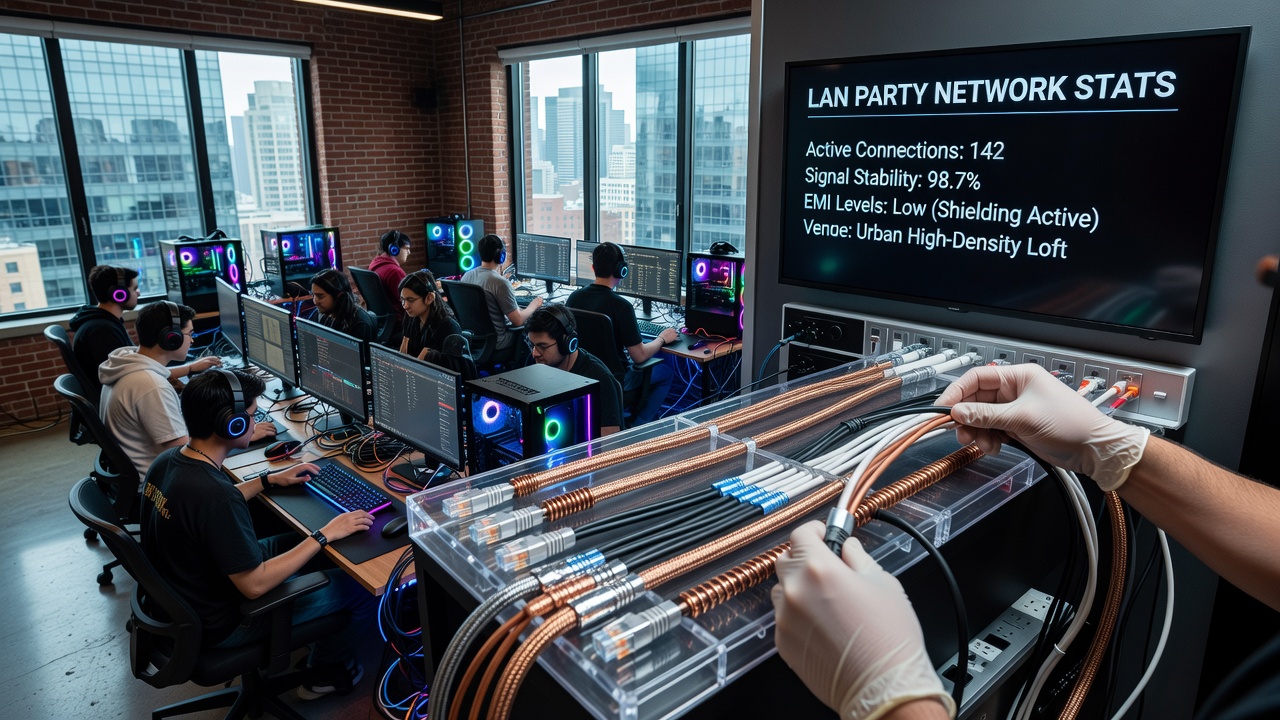
LAN parties in high-density urban venues bring together dozens or hundreds of systems in confined spaces where electromagnetic interference from overlapping devices, power distribution lines, and nearby wireless networks creates measurable disruptions to wired Ethernet connections. Research indicates that signal degradation occurs when unshielded cables pick up noise from adjacent equipment operating on similar frequency bands, and data from multiple events shows packet loss rates climbing above baseline levels once participant counts exceed fifty in a single room.
Understanding Interference Sources in Dense Environments
Urban venues such as convention centers and converted warehouses often contain dense clusters of electronics that generate electromagnetic fields, while fluorescent lighting systems and HVAC equipment add additional broadband noise. Studies conducted at similar gatherings reveal that Category 5e and Category 6 cables without proper shielding experience increased jitter when placed near power strips carrying multiple high-draw components, and observers note that 2.4 GHz and 5 GHz wireless access points operating at full capacity further compound the problem by inducing crosstalk into nearby unshielded twisted pairs. Engineers have documented these effects through spectrum analyzers placed at various points across event floors, confirming that interference peaks align with periods of maximum simultaneous gameplay activity.
Core Shielding Methods Applied to Ethernet Infrastructure
Shielded twisted pair cables incorporating aluminum foil or braided copper layers around individual pairs and the overall bundle block external fields more effectively than unshielded variants, and manufacturers specify these designs for environments where electromagnetic compatibility becomes critical. Ferrite cores clamped onto cable ends absorb high-frequency noise before it reaches the network interface card, while proper grounding of shield terminations at both ends prevents ground loops that could otherwise introduce new interference paths. Data collected during large-scale events demonstrates that installations using foil-shielded cables maintain consistent throughput even when dozens of graphics processing units run at peak loads within a few meters of the network runs.
Practical Implementation at Scale
Event organizers coordinate cable routing to maintain minimum separation distances from power lines and lighting ballasts, and they often deploy metal conduit or shielded patch panels in central distribution areas to create additional barriers. One documented case involved technicians replacing standard cables with individually shielded variants mid-event, after which measured error rates dropped by more than half according to switch logs. Grounding schemes that connect cable shields to a single common point reduce the risk of circulating currents, and technicians verify continuity with multimeters before sessions begin to ensure the shielding remains effective throughout the gathering.
Material and Design Advances Supporting Stability
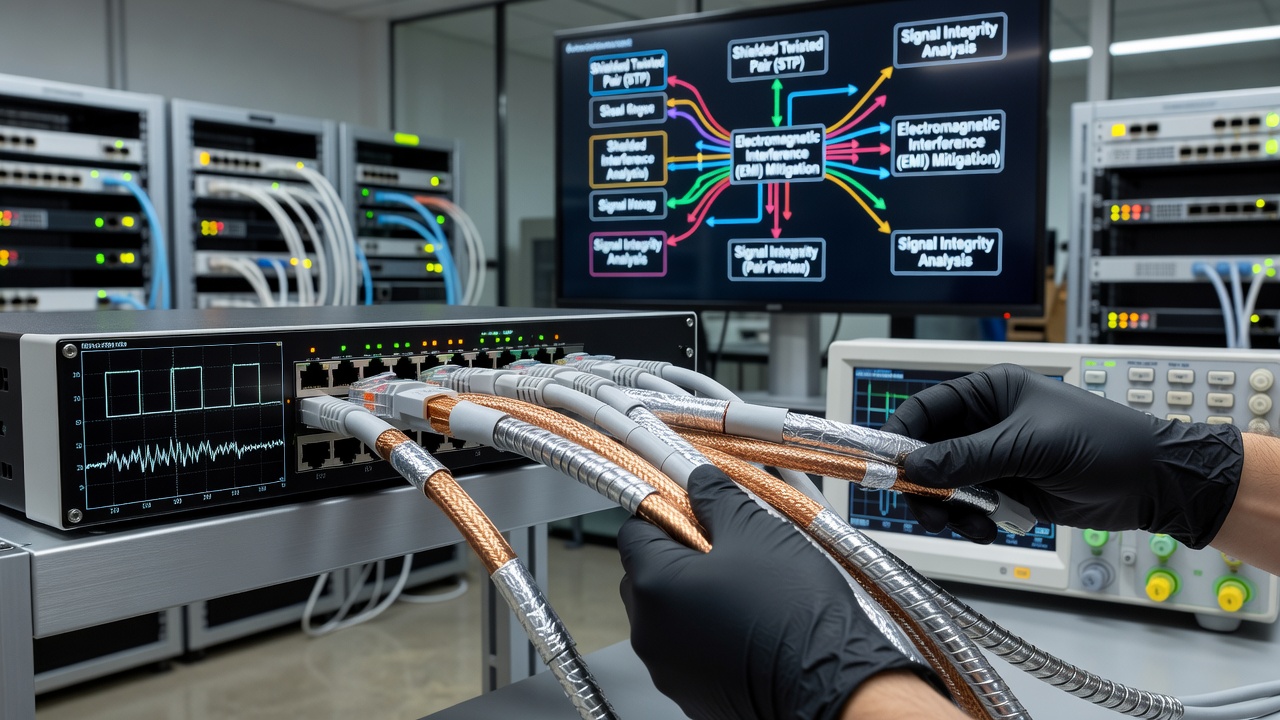
Modern shielding materials combine multiple layers including foil, braid, and sometimes conductive polymers to address a wider spectrum of interference frequencies, and independent laboratory tests confirm improved attenuation figures compared with earlier single-layer constructions. Connectors with integrated shielding continue the barrier all the way to the jack, preventing gaps that could allow noise ingress at termination points. Researchers tracking performance across repeated events in July 2026 noted that venues adopting these updated cable assemblies experienced fewer connection drops during peak hours than those relying on legacy unshielded infrastructure.
Measurement and Validation Approaches
Network monitoring tools capture real-time statistics on frame errors and retransmissions, allowing organizers to identify problematic cable runs quickly. Spectrum analysis equipment placed near cable bundles provides visual confirmation of interference sources, and technicians use these readings to adjust routing or add targeted shielding where needed. Industry reports from organizations such as the IEEE detail standardized testing procedures that quantify shielding effectiveness under controlled conditions, and these same methods have been adapted for field verification during live events.
Integration With Broader Venue Infrastructure
Power distribution planning that spaces high-current lines away from data pathways reduces the overall electromagnetic footprint, and some venues install dedicated low-noise circuits for networking equipment. Coordinated scheduling of wireless channel usage helps limit overlap with sensitive Ethernet frequencies, while physical separation of server racks from player stations further isolates potential interference. Figures released by research institutions including the National Institute of Standards and Technology highlight how combined electrical and data infrastructure planning yields measurable improvements in signal integrity across multi-user environments.
Conclusion
Electromagnetic shielding techniques ranging from foil-wrapped cables and ferrite suppression to careful grounding and routing practices provide documented improvements in Ethernet stability during crowded LAN sessions in urban settings. Continued application of these methods, supported by ongoing measurements and updated materials, allows organizers to maintain reliable wired connectivity even as participant density and equipment complexity increase.