Examining How Regional Internet Peering Agreements Shape Matchmaking Fairness in Cross-Border Cooperative Simulation Communities
Henrik Bennett · Jul 6, 2026
Examining How Regional Internet Peering Agreements Shape Matchmaking Fairness in Cross-Border Cooperative Simulation Communities
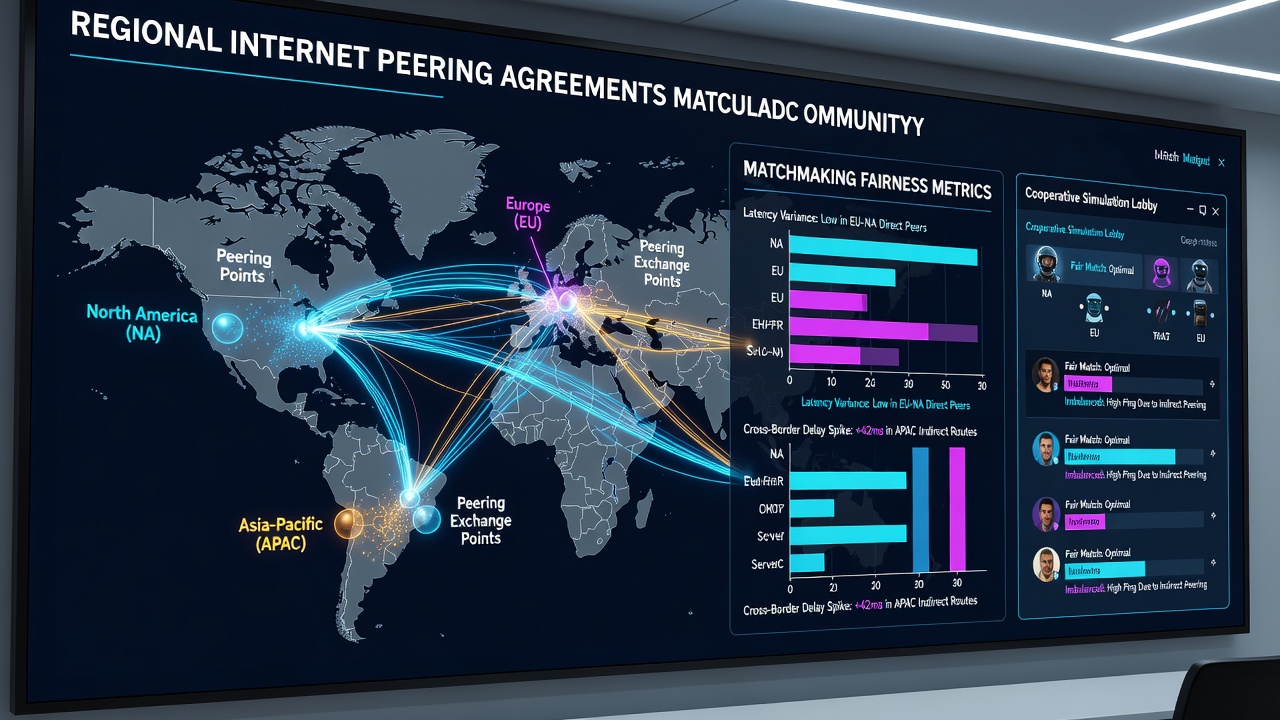
Regional internet peering agreements determine how data packets travel between autonomous networks operated by different internet service providers, and these arrangements directly influence latency levels that matchmaking systems encounter when pairing players from multiple countries in cooperative simulation environments. Cooperative simulation communities often involve titles focused on shared logistics, flight operations, or strategic planning where participants join sessions spanning Europe, North America, and Asia Pacific regions simultaneously.
Understanding Peering Structures in Global Networks
Internet service providers establish peering agreements at physical exchange points that allow traffic to move between their infrastructures without traversing paid transit routes, and these deals vary significantly by region because local regulations and infrastructure investments shape the terms. In dense urban corridors across Western Europe, for instance, multiple neutral internet exchange points facilitate direct handoffs that keep round-trip times under 30 milliseconds for nearby players, whereas agreements in parts of South America and Southeast Asia frequently route traffic through distant hubs, adding 80 to 120 milliseconds of delay even for geographically proximate users. Researchers at academic institutions have documented these patterns through traceroute analyses that reveal how settlement-free peering versus paid peering alters path lengths in real time.
Matchmaking algorithms in simulation platforms collect ping data and estimated latency metrics before assigning teams, yet the underlying network topology created by peering contracts means that players connecting through certain providers experience systematic disadvantages when the system attempts to balance skill levels across borders. Data collected during peak hours shows that sessions involving participants from regions with denser peering fabrics consistently report lower variance in connection quality compared with groups that include users routed through transit-heavy corridors.
Latency Effects on Cooperative Session Dynamics
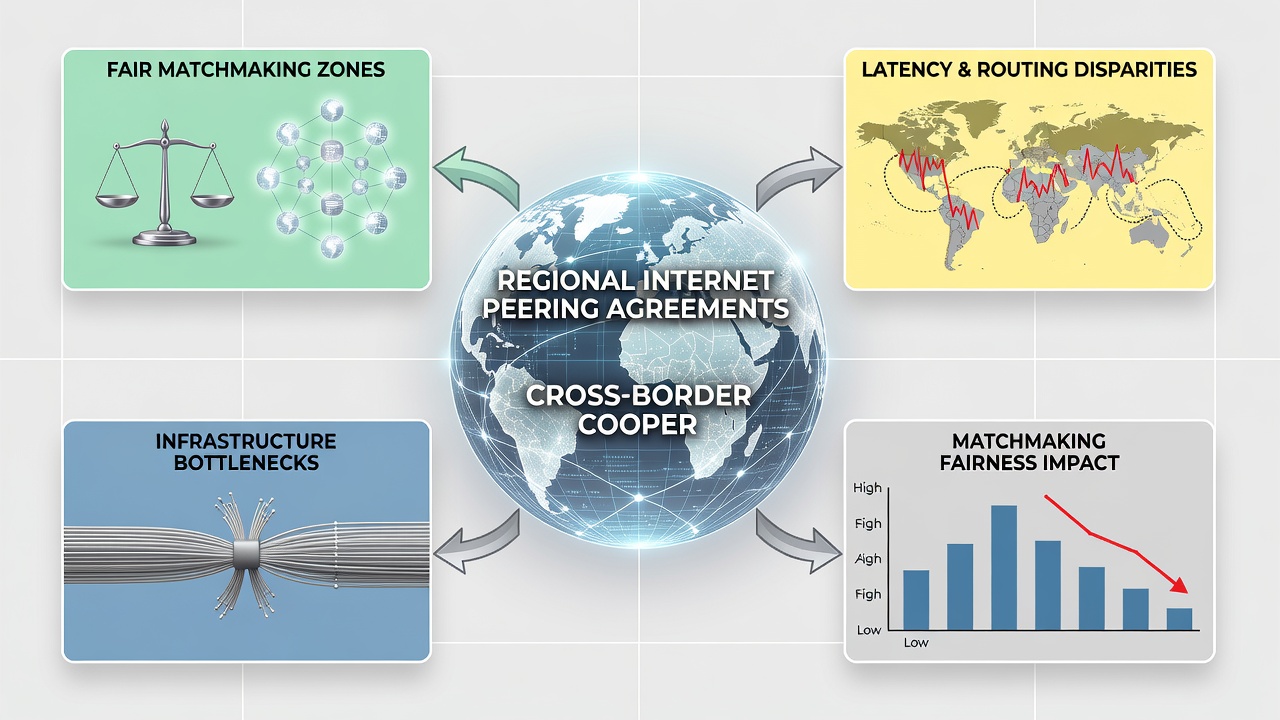
Simulation communities rely on synchronized state updates for shared environments such as virtual air traffic control or collaborative supply chain modeling, and elevated latency from suboptimal peering paths disrupts timing precision required for coordinated actions. A study examining traffic flows between major carriers indicated that cross-border sessions suffer measurable desynchronization when one participant routes through an exchange point located more than 1,500 kilometers away from the primary server cluster. Observers note that these discrepancies become especially pronounced during events scheduled in July 2026, when increased summer usage amplified contention at shared peering locations and exposed imbalances that matchmaking systems had not fully compensated for through region-based weighting.
Cooperative titles often implement predictive compensation techniques that attempt to reconcile differing arrival times of player inputs, but the effectiveness of these techniques depends on the stability of the underlying paths established by peering contracts. When agreements favor local traffic exchange, jitter remains low enough for smooth interpolation, whereas routes that depend on distant transit links introduce variability that exceeds the thresholds built into compensation buffers.
Matchmaking Algorithms and Regional Bias
Developers configure matchmaking systems to prioritize connection quality alongside skill metrics, yet regional peering differences create situations where certain geographic clusters receive preferential pairing because their average latencies fall within narrower acceptable bands. According to figures from connectivity reports issued by the European Commission, exchange points in the EU maintain higher densities of settlement-free peering than equivalent facilities in other continents, producing measurable advantages for European participants when algorithms seek to form balanced international groups. These advantages appear in queue statistics that show faster match formation and lower abandonment rates for users connected through well-peered networks.
Analyses conducted by research teams at universities in Australia and Canada have tracked how changes in peering policy affect player distribution over multi-month periods, revealing that adjustments at single exchange points can shift the geographic composition of active sessions by several percentage points within weeks. Cooperative simulation platforms respond to such shifts by updating their latency tolerance parameters, though the updates themselves depend on accurate mapping of current network topologies that peering agreements continuously modify.
Case Examples from Simulation Communities
One documented instance involved a logistics simulation title where players from North American carriers relying on paid transit routes experienced consistent 70-millisecond disadvantages against counterparts using direct peering arrangements in the same time zone. Community data logs collected over several months demonstrated that the affected group received fewer invitations to high-stakes cooperative events because matchmaking filters excluded connections exceeding internal thresholds. Similar patterns emerged in flight simulation networks when agreements between carriers in the Asia Pacific region rerouted traffic through North American hubs during maintenance windows, temporarily inflating latency for entire cohorts of users.
Industry organizations tracking online infrastructure have compiled comparative datasets that illustrate how peering density correlates with session retention rates across different titles. These datasets indicate that communities operating under more uniform regional peering conditions sustain higher participation from international members because matchmaking fairness metrics remain closer to parity.
Conclusion
Regional internet peering agreements establish the physical and contractual foundations that determine latency distribution in cross-border cooperative simulation environments, and matchmaking systems inherit the resulting imbalances when they attempt to create equitable sessions. Continued monitoring of exchange point performance and periodic adjustments to routing policies provide the primary mechanisms through which developers and network operators address emerging disparities. Data from multiple regions shows that incremental improvements in peering density translate into measurable gains in matchmaking consistency for participants regardless of their location.