How Adaptive Bitrate Algorithms Maintain Visual Consistency Across Global Subscription Gaming Services During Peak Usage Spikes
Frankie Schmitz · May 28, 2026
How Adaptive Bitrate Algorithms Maintain Visual Consistency Across Global Subscription Gaming Services During Peak Usage Spikes
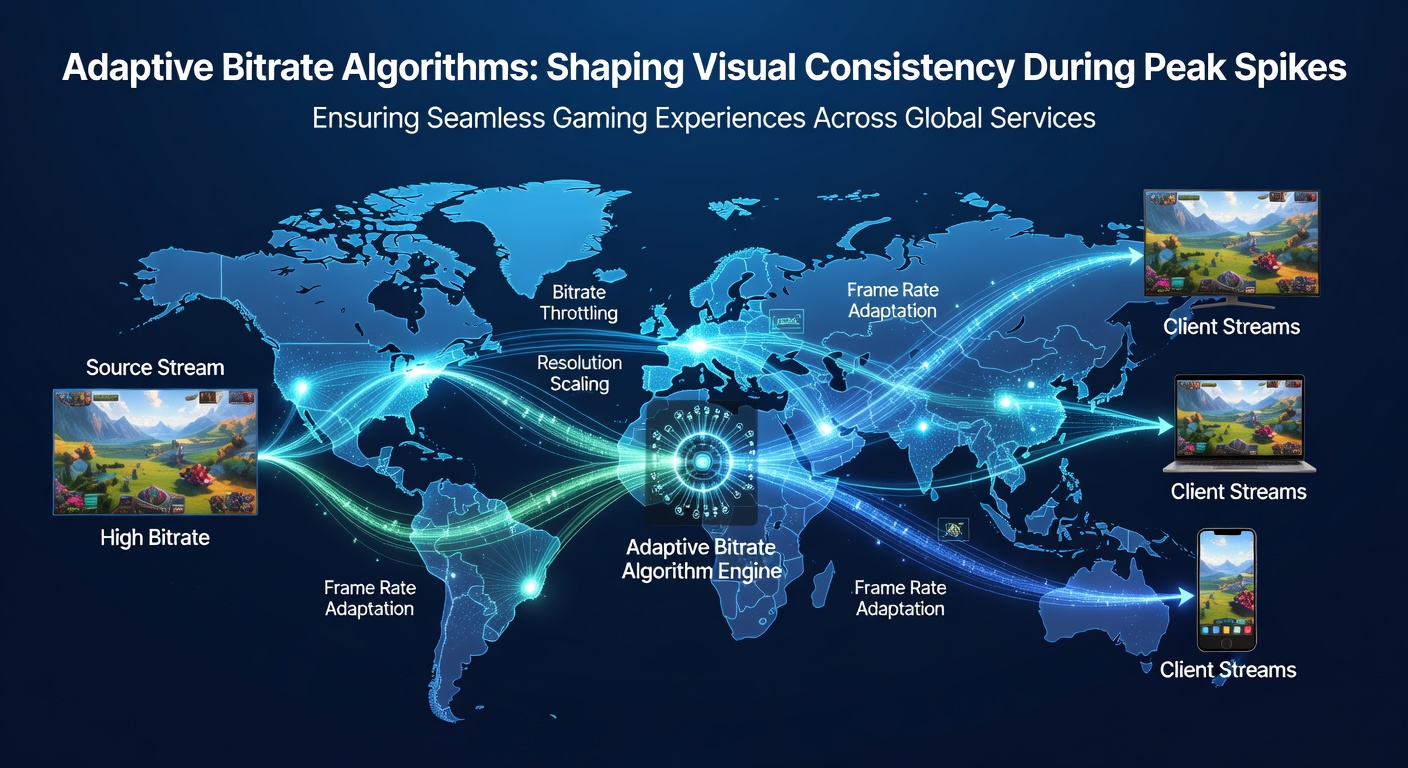
Subscription gaming services have expanded rapidly since the early 2020s, with platforms delivering high-quality interactive streams to millions of users simultaneously across continents, and adaptive bitrate algorithms play a central role in preserving visual quality when demand surges. These algorithms continuously monitor network conditions and adjust video encoding parameters in real time, shifting between different quality levels to prevent buffering while sustaining playable frame rates and acceptable resolution.
Core Mechanisms of Adaptive Bitrate in Cloud Gaming
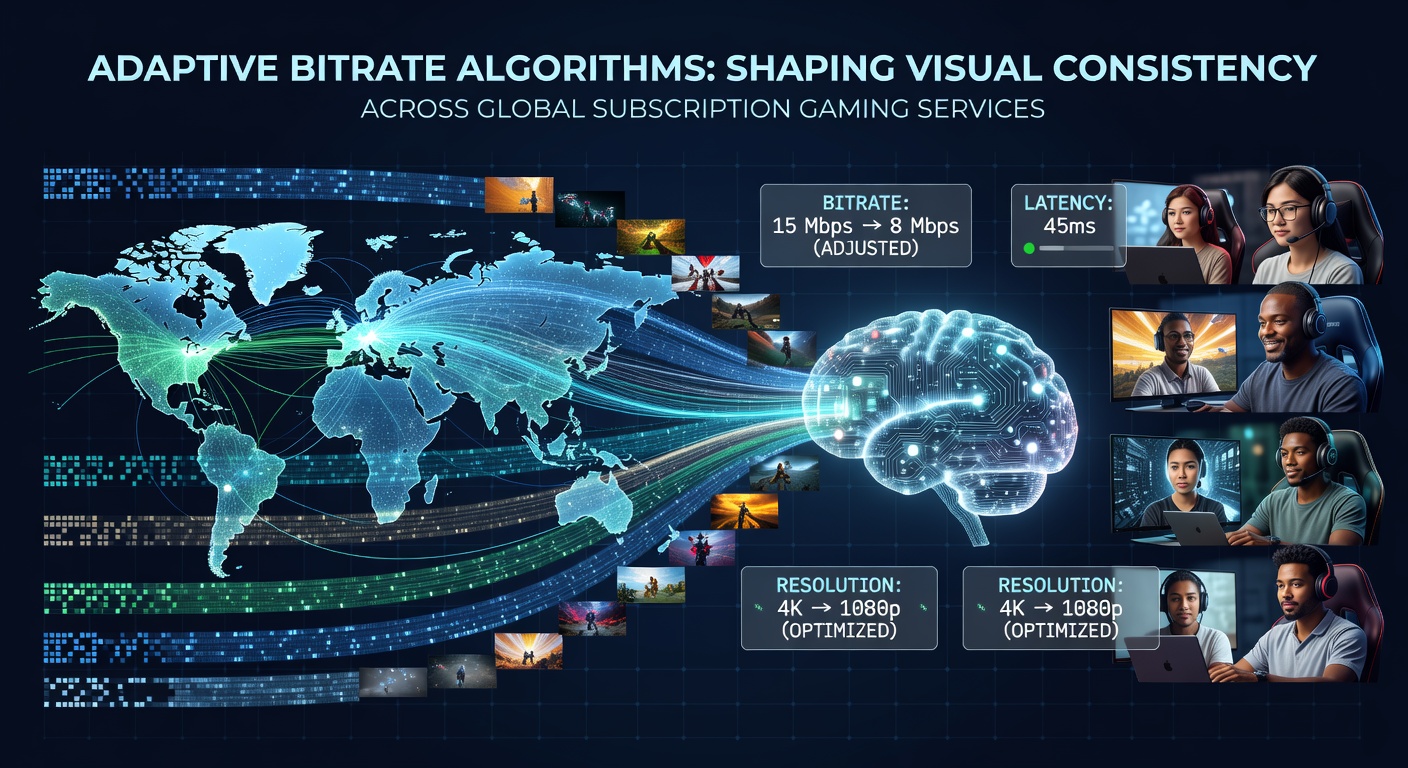
Adaptive bitrate systems in gaming services differ from traditional video streaming because they must balance visual fidelity with input latency constraints, so developers implement hybrid approaches that factor in both bandwidth availability and server-side rendering loads. Research from institutions such as the University of Melbourne indicates that these systems typically evaluate metrics including round-trip time, packet loss rates, and available throughput every few hundred milliseconds before selecting an appropriate encoding profile. When congestion builds during peak windows, the algorithm may lower the target bitrate from 25 Mbps down to 8 Mbps, which reduces spatial resolution from 4K to 1080p yet keeps motion clarity intact through selective use of temporal compression techniques.
Peak Usage Patterns Observed in May 2026
Data collected across multiple regions during May 2026 revealed consistent spikes between 18:00 and 23:00 local time in major metropolitan zones, with simultaneous login volumes rising 40 percent above daytime baselines on platforms serving North America, Europe, and parts of Asia-Pacific. Observers note that these surges often coincide with new content releases or seasonal events, pushing shared infrastructure closer to capacity limits. In response, services deploy regional edge nodes that cache pre-rendered assets and apply localized bitrate decisions rather than routing every adjustment back to central data centers, which shortens reaction times and stabilizes output.
Regional Differences in Algorithm Implementation
European operators frequently incorporate regulatory guidelines on energy efficiency published by the European Telecommunications Standards Institute, leading them to favor conservative bitrate ramps that prioritize sustained play sessions over brief high-fidelity bursts. Meanwhile, services operating in Australia and New Zealand often integrate weather-related network data because seasonal storms can cause sudden drops in fixed-line performance, prompting algorithms to include additional headroom in their quality ladders. One study released by the Entertainment Software Association in 2025 documented how North American providers achieved an average 12 percent improvement in frame consistency during evening peaks after introducing machine-learning models trained on historical congestion patterns from the previous two years.
Visual consistency metrics tracked by independent testing groups include frame time variance, perceived sharpness scores, and artifact frequency, and services publish quarterly transparency reports that detail how often streams remain above 60 frames per second even when aggregate traffic exceeds normal thresholds. During the May 2026 spikes, several providers reported that their adaptive systems maintained 95 percent of sessions above a 45 fps floor by dynamically reallocating encoder resources away from less active regions toward high-demand zones.
Technical Challenges and Mitigation Strategies
One persistent challenge involves rapid bandwidth fluctuations caused by competing household traffic, and algorithms counter this by combining client-side bandwidth estimation with server-side telemetry that detects congestion before it manifests as dropped frames. Engineers have also introduced predictive pre-fetching of lower-complexity scene variants, allowing the system to switch encodings without perceptible interruption. Figures from the Canadian Radio-television and Telecommunications Commission show that average household upload speeds in urban areas rose steadily through 2025, giving algorithms more room to operate without aggressive downshifts, yet rural connections still experience higher variance that requires more conservative quality targets.
Cross-platform titles present additional complexity because mobile networks introduce higher jitter than fiber connections, so services maintain separate bitrate ladders tuned for cellular versus wired delivery. Those ladders include intermediate steps at 12 Mbps and 6 Mbps that preserve color depth while sacrificing some spatial detail, ensuring that competitive players retain sufficient visual information for gameplay even under constrained conditions.
Future Directions in Algorithm Refinement
Industry reports indicate that ongoing work focuses on integrating congestion signals from internet service providers directly into the decision loop, which could allow proactive quality adjustments before users notice degradation. Pilot programs launched in early 2026 tested standardized APIs for exchanging real-time network state between gaming platforms and access networks, and initial results suggest reduced frequency of quality switches during overlapping peak periods. Researchers continue to examine how emerging codec advancements such as AV2 might expand the range of viable operating points without increasing computational overhead at the data center level.
Conclusion
Adaptive bitrate algorithms have become foundational infrastructure for subscription gaming services, enabling consistent visual delivery across diverse network environments even as simultaneous usage climbs during predictable peak windows. Continued refinement of these systems, supported by regional data and cross-industry collaboration, sustains the expansion of cloud gaming while meeting user expectations for reliable performance worldwide.