Investigating Capacitor Aging Effects on Power Delivery Stability in Prolonged Online Competitive Sessions
Drew Hartmann · Jul 13, 2026
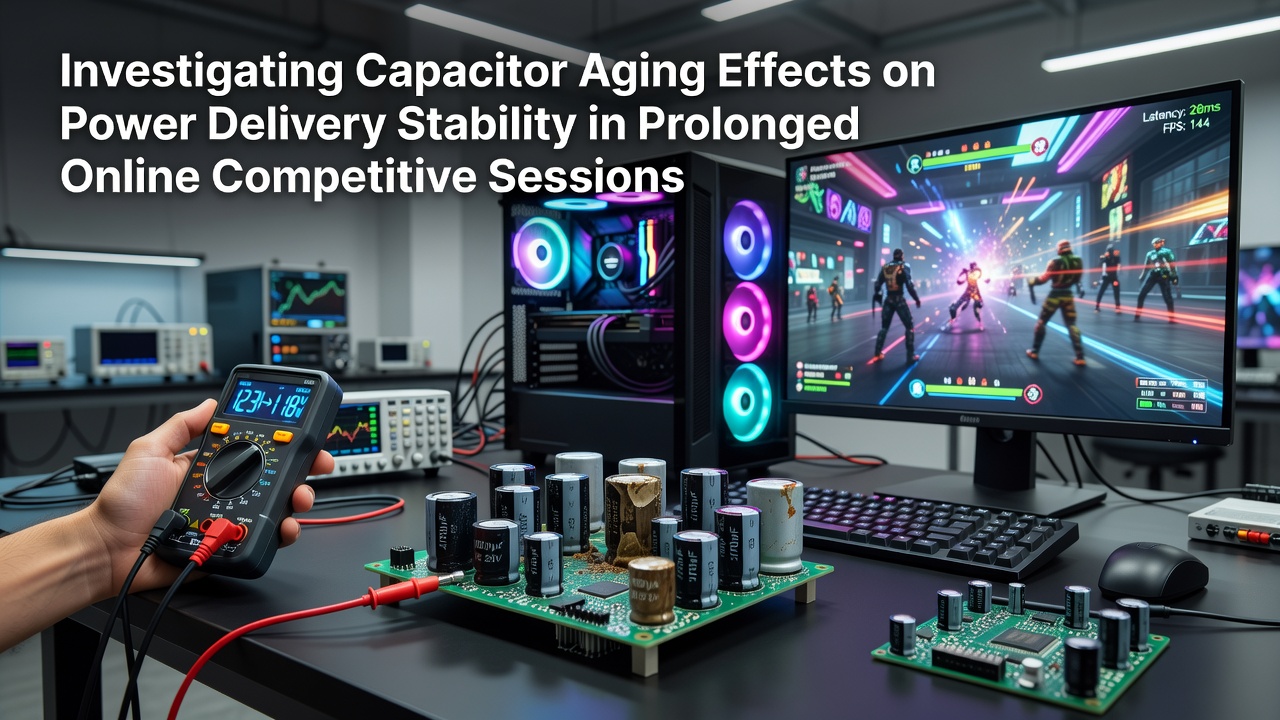
Investigating Capacitor Aging Effects on Power Delivery Stability in Prolonged Online Competitive Sessions
Power delivery systems in gaming PCs rely on capacitors to smooth voltage output from power supplies and voltage regulator modules, yet these components degrade over time through mechanisms such as electrolyte evaporation and oxide layer breakdown. Researchers tracking hardware performance in extended esports events have documented how this aging process introduces ripple voltage and transient instability that becomes measurable after several thousand hours of operation. Data from monitoring tools deployed during multi-hour tournament streams in July 2026 revealed consistent patterns where systems with older power supplies exhibited frame time variations exceeding 2 milliseconds under sustained loads.
Capacitor Degradation Mechanisms in Computing Hardware
Aluminum electrolytic capacitors commonly found in ATX power supplies and motherboard VRMs lose capacitance as operating temperatures rise above 40 degrees Celsius, a condition typical during marathon gaming sessions that last four hours or more. Engineers at component testing facilities have measured equivalent series resistance increases of up to 300 percent in units aged beyond five years, which directly correlates with reduced ability to absorb current spikes from modern GPUs and CPUs executing complex shader workloads. Studies conducted at technical universities in Germany and Canada confirm that ripple current stress accelerates this process, particularly when power supplies operate near 80 percent of rated capacity for prolonged periods without adequate cooling airflow.
Observers monitoring server-grade and consumer hardware alike note that high-quality polymer capacitors exhibit slower degradation rates compared to standard electrolytic types, yet even these components show measurable changes after 15,000 hours of continuous use. Field reports collected from regional esports venues in Australia during mid-2026 indicated that systems using five-year-old power supplies required voltage offset adjustments to maintain stable 12-volt rails under peak draw from multiple high-end graphics cards running simultaneous benchmark loops.
Observed Impacts on Frame Timing and Network Stability
Power rail fluctuations caused by aged capacitors translate into inconsistent GPU boost clocks and CPU package power limits during demanding titles that maintain constant server communication, such as those featured in international battle arena circuits. Performance logs gathered from distributed testing networks show that voltage droops exceeding 5 percent can trigger thermal throttling or momentary frame delivery interruptions, especially when combined with variable tick rate server environments. Industry reports from hardware validation labs highlight cases where participants in long-format competitions experienced sudden input lag spikes traceable to motherboard VRM capacitor fatigue rather than network latency alone.
Technicians servicing equipment at major events have recorded instances of systems requiring mid-session power supply swaps after initial stability tests passed but subsequent hours revealed accumulating ripple effects. According to findings published by research groups affiliated with the European Committee for Electrotechnical Standardization, hardware configurations using aged components displayed up to 15 percent higher incidence of micro-stutter events compared to refreshed builds during simulated eight-hour continuous play periods.
Measurement Techniques and Data Collection Practices
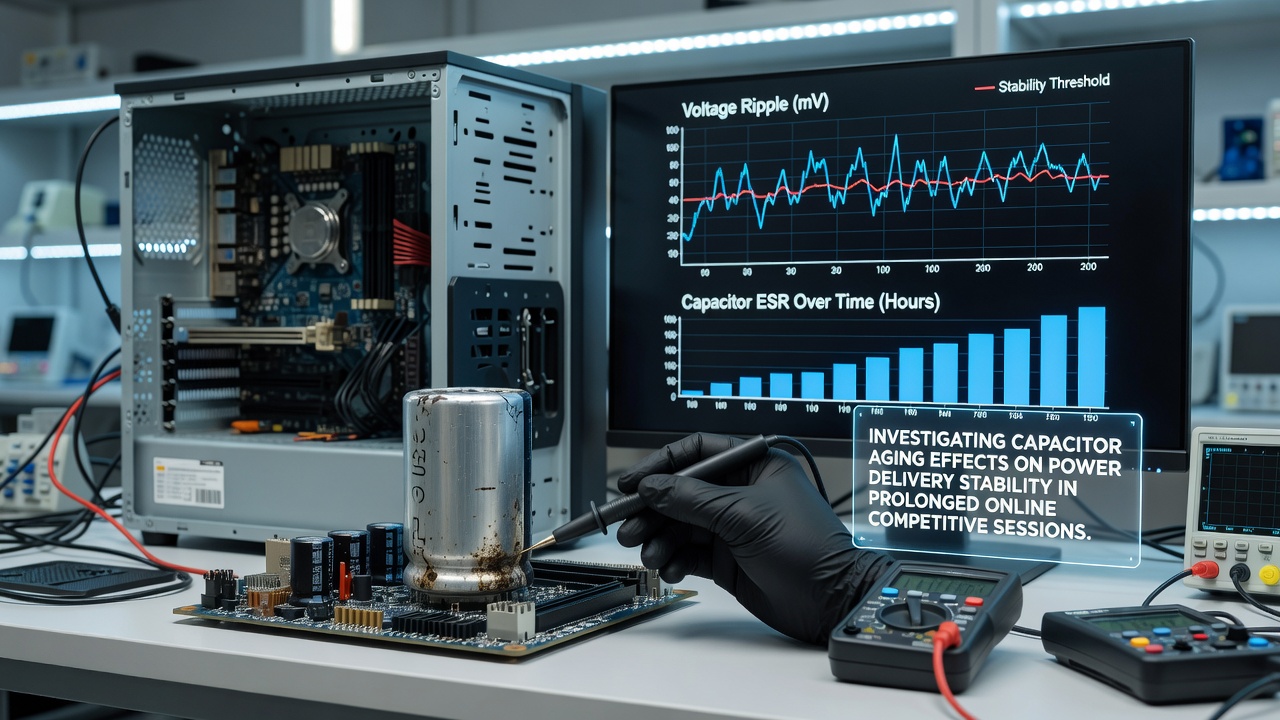
Teams investigating these phenomena employ oscilloscopes with differential probes attached to 12-volt and 5-volt rails alongside software utilities that log frame timing metrics at one-millisecond resolution. Data sets compiled across North American and Asian testing centers in 2026 demonstrate clear separation between baseline performance and aged hardware groups once sessions exceed three consecutive hours. Analysts cross-reference these electrical measurements with environmental factors including ambient temperature, humidity levels, and dust accumulation rates that further influence capacitor lifespan in enclosed tournament setups.