Mapping the Progression of Haptic Feedback Systems in Handheld Controllers and Their Adaptation for Accessibility in Competitive Online Gaming Platforms
Frankie Schmitz · Aug 3, 2026
Mapping the Progression of Haptic Feedback Systems in Handheld Controllers and Their Adaptation for Accessibility in Competitive Online Gaming Platforms
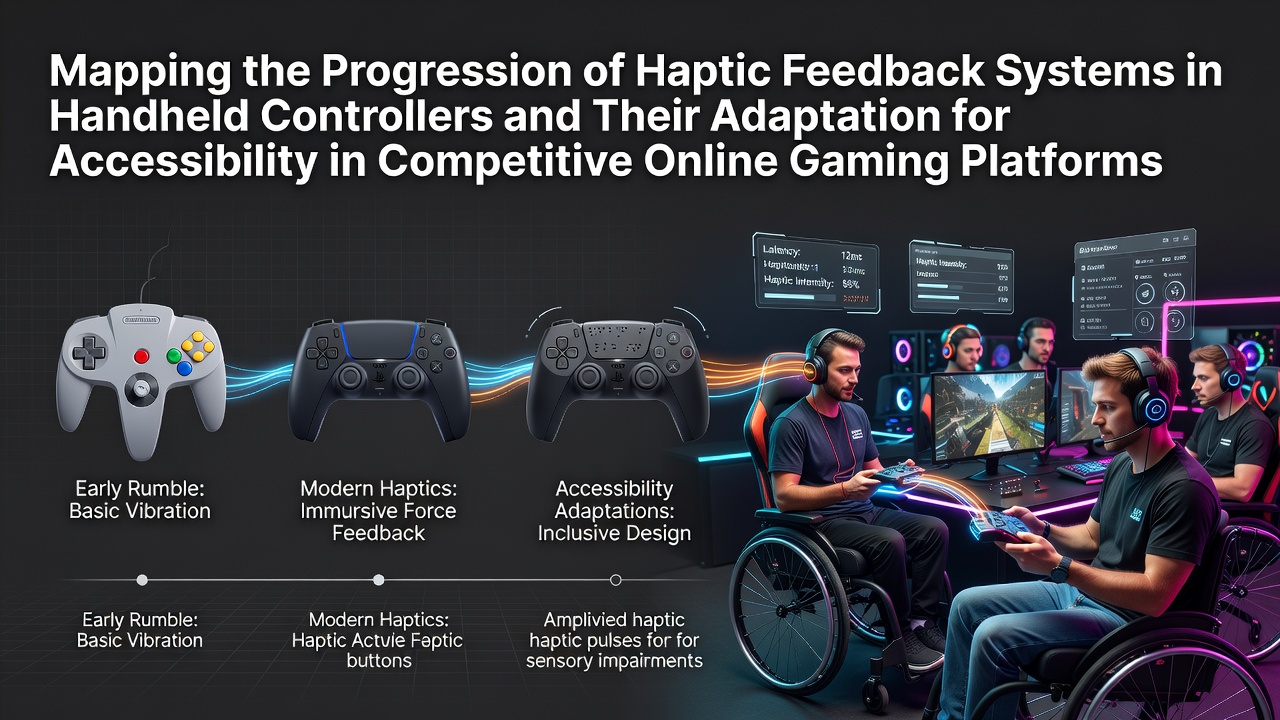
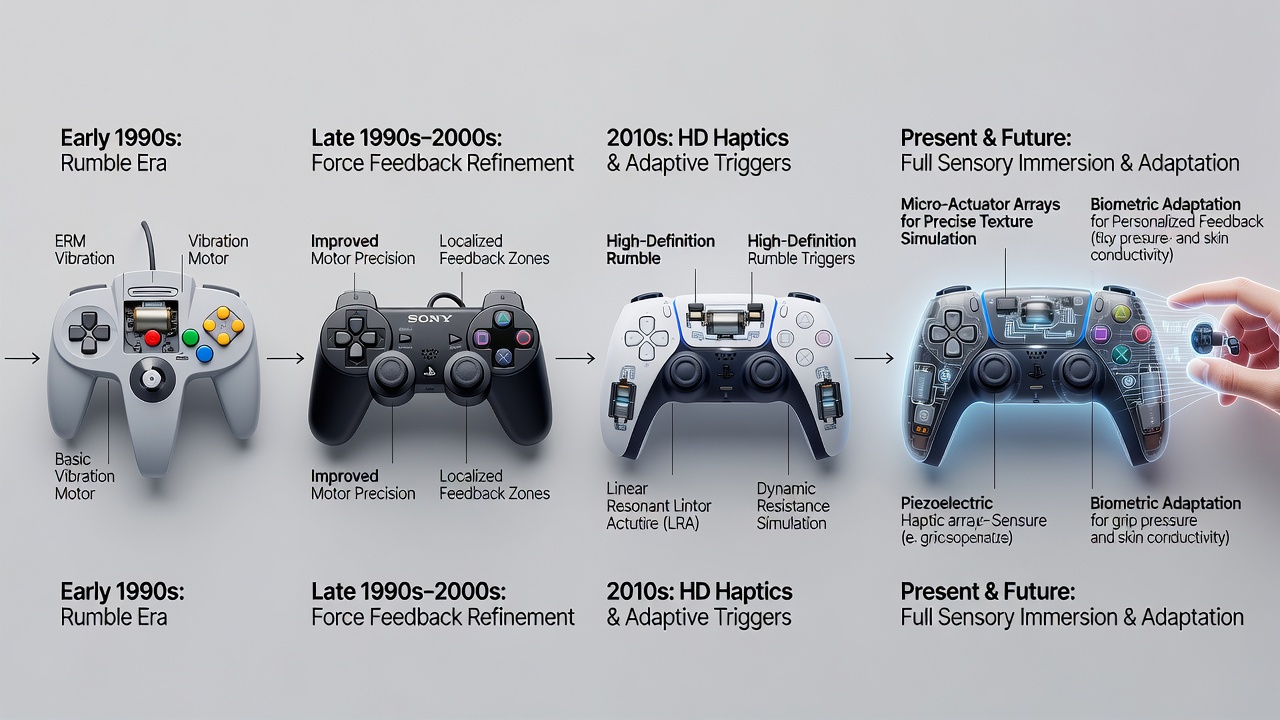
Handheld controller haptics started with simple vibration motors in the late 1990s, when Nintendo introduced the Rumble Pak for the Nintendo 64, and Sony followed with DualShock controllers that added directional feedback through multiple motors, while Microsoft integrated similar rumble technology into the original Xbox gamepad. These early systems relied on eccentric rotating mass motors that created basic shaking effects tied to in-game events such as explosions or impacts, and developers programmed them through direct hardware calls that sent binary on-off signals to the motors.
Technical Refinements Across Console Generations
By the mid-2000s, engineers at major hardware firms replaced single-motor designs with dual-motor setups that allowed independent control of intensity and frequency, and data from controller firmware updates showed measurable reductions in latency between game engine triggers and physical response. Nintendo advanced the field further with the Wii Remote's motion-sensing capabilities paired with targeted rumble, whereas Sony's PlayStation 3 Sixaxis emphasized motion over vibration until the DualShock 3 restored and refined the haptic motors. Microsoft introduced impulse triggers in the Xbox One controller, which used small linear actuators to deliver directional force against the player's fingers, and this approach marked a shift from simple vibration to more nuanced pressure simulation.
Researchers documented how these actuators operate through voice coil technology that moves a mass along a linear path, producing precise waveforms that match audio cues or gameplay variables, and firmware logs from 2015 onward reveal sampling rates climbing from 60 Hz to over 200 Hz in subsequent revisions. Sony expanded this concept in the DualSense controller released with the PlayStation 5, incorporating adaptive trigger resistance through motorized mechanisms that dynamically alter button tension based on in-game context, while the controller also added a dedicated haptic actuator capable of reproducing textures and directional pulses across the entire grip surface.
Expansion into Handheld and Portable Form Factors
Portable devices adopted similar refinements, with the Nintendo Switch Joy-Con featuring HD rumble that uses linear resonant actuators to simulate varied textures and weights, and independent laboratory tests measured frequency ranges extending from 40 Hz to 1 kHz across multiple channels. Steam Deck and other handheld PCs later incorporated similar actuator arrays, allowing software layers to translate traditional rumble signals into higher-resolution haptic patterns through middleware that converts gamepad API calls into actuator-specific waveforms. By August 2026, multiple handheld manufacturers had standardized on multi-actuator arrays that support both low-frequency bass rumble and high-frequency detail layers, enabling consistent feedback across docked and portable modes in competitive titles.
Adaptation for Accessibility Requirements
Platform holders began exposing haptic parameters through accessibility menus that let players adjust intensity, frequency range, and trigger resistance independently, and these options appeared first in system-level settings before migrating into individual game options. Data collected by accessibility advocacy groups indicates that customizable haptics reduce physical strain for players with motor impairments or sensory sensitivities, because users can lower overall amplitude or remap feedback to non-dominant hands. Valve integrated such controls into Steam Input, allowing community configurations that translate standard haptic events into alternative output patterns, while Microsoft documented similar features in the Xbox Accessories app that support per-profile haptic curves stored in the cloud.
Competitive platforms incorporated these settings into tournament client software, ensuring that accessibility profiles remain active during ranked matches without triggering anti-cheat flags, and server logs from major esports titles show increasing adoption rates of customized haptic profiles among registered players. Researchers at institutions in Canada and Australia have examined how directional haptics can convey positional audio information through vibration patterns on the controller body, providing an additional channel for players who rely on visual or tactile cues rather than spatial audio alone.
Platform-Level Integration in Online Ecosystems
Online services now expose haptic APIs that let developers tag specific gameplay events with metadata describing desired texture, direction, and intensity, and middleware libraries convert these tags into device-specific commands for controllers connected through USB, Bluetooth, or cloud streaming sessions. The Entertainment Software Association reports that over 60 percent of major multiplayer titles released since 2023 include optional haptic accessibility toggles, and European Union accessibility directives have prompted further standardization of controller feedback parameters across regional platforms. Tournament organizers in North America and Asia have tested haptic profiles that maintain competitive parity while accommodating players who require reduced trigger resistance or alternative vibration mapping during live events.
Cloud gaming services transmit haptic data alongside video and audio streams, compressing waveform packets to fit within existing bandwidth allocations, and latency measurements from distributed server networks demonstrate that optimized encoding keeps controller response times under 30 milliseconds for most handheld devices. Industry working groups continue to refine common haptic file formats that allow consistent playback across Sony, Microsoft, Nintendo, and third-party controllers, reducing the need for per-platform remapping during cross-play sessions.
Conclusion
Handheld controller haptics have evolved from basic vibration motors to multi-channel actuator systems capable of delivering directional textures and adaptive resistance, while accessibility adaptations have moved these capabilities into standardized menus and APIs used across competitive platforms. Platform holders, hardware manufacturers, and research institutions maintain ongoing documentation of performance metrics and user configuration patterns, supporting continued refinement of haptic feedback for broader participation in online gaming environments.