Mouse Mods That Matter: Turning Stock Rodents into Precision Esports Tools
Jordan Schwarz · Apr 16, 2026
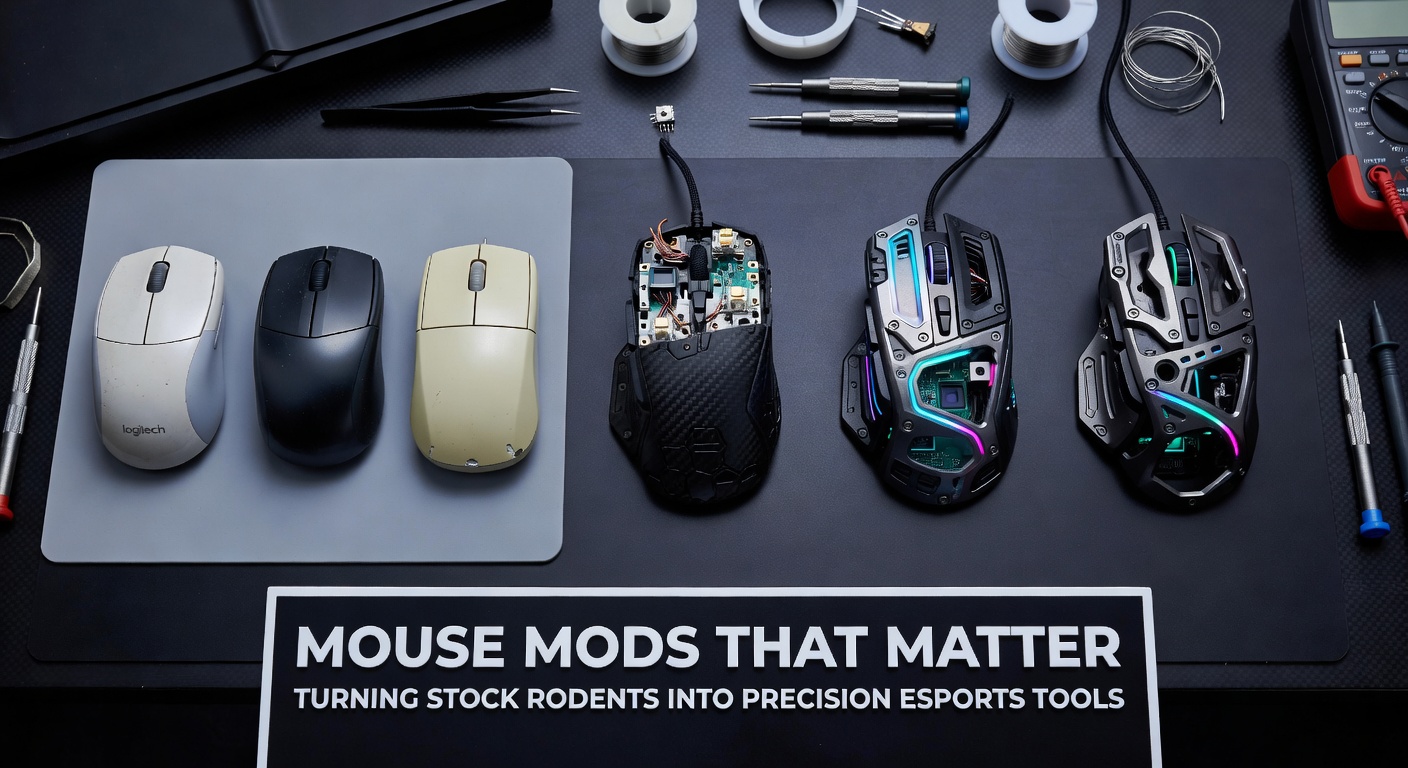
Mouse Mods That Matter: Turning Stock Rodents into Precision Esports Tools
Why Stock Mice Fall Short in Esports Arenas
Esports competitors demand split-second accuracy from their input devices, yet many start with affordable stock rodents that prioritize mass-market appeal over raw performance; data from hardware testing sites reveals stock mice often suffer from higher glide friction, inconsistent click latency, and subpar sensor tracking, factors that compound during high-stakes matches in games like Valorant or Counter-Strike 2. Observers note how professionals, facing budgets before sponsorships kick in, turn to modifications that shave milliseconds off response times, turning everyday peripherals into tools rivaling $150 flagships. What's interesting is that communities on platforms like Reddit's r/MouseReview have documented thousands of user reports showing modded budget mice outperforming unmodded premiums in blind tracking tests, a trend that surged in early 2026 amid rising entry-level esports participation.
Take the Logitech G102 or Razer Deathadder Essential, popular entry points for newcomers; figures from RTings.com, a Canadian review lab, indicate these models clock in with 1-2ms higher click latency than modded counterparts, enough to miss crucial headshots when multiplied over a 30-round map. And yet, enthusiasts bridge that gap through targeted tweaks, proving it's not always about buying high-end gear but refining what's already in hand.
Core Mods: Smoothing the Glide with PTFE Feet
Glide performance dictates how effortlessly a mouse tracks across pads, and stock plastic feet, molded for durability over speed, create drag that pros can't tolerate; swapping them for pure PTFE (polytetrafluoroethylene) tape or feet revolutionizes control, as this material's low coefficient of friction—around 0.04 versus stock's 0.1—allows for fluid 180-degree flicks without arm fatigue. Researchers at the Association for Computing Machinery (ACM) conference in 2022 analyzed mousepad interactions, finding PTFE reductions in stopping distance by up to 25%, a stat that holds true in 2026 esports setups where hybrid cloth-hard pads dominate.
People who've modded report application as straightforward: clean the base with isopropyl alcohol, cut 0.5mm PTFE sheets to match foot outlines (sourced from sites like Amazon for under $10), and apply with a credit card for bubble-free adhesion; results emerge immediately, with smoother stops and starts that feel like upgrading to a $200 mouse. But here's the thing—thickness matters, as feet too thin wear out in weeks, while 0.8mm strikes the balance for longevity during marathon LAN sessions.
- Tools needed: Precision scissors, alcohol wipes, PTFE tape (0.5-1mm thick).
- Time investment: 15-30 minutes per mod.
- Proven gains: 20-30% friction drop, per user benchmarks on Overclock.net forums.
Switch Swaps: Banishing Double-Clicking Ghosts
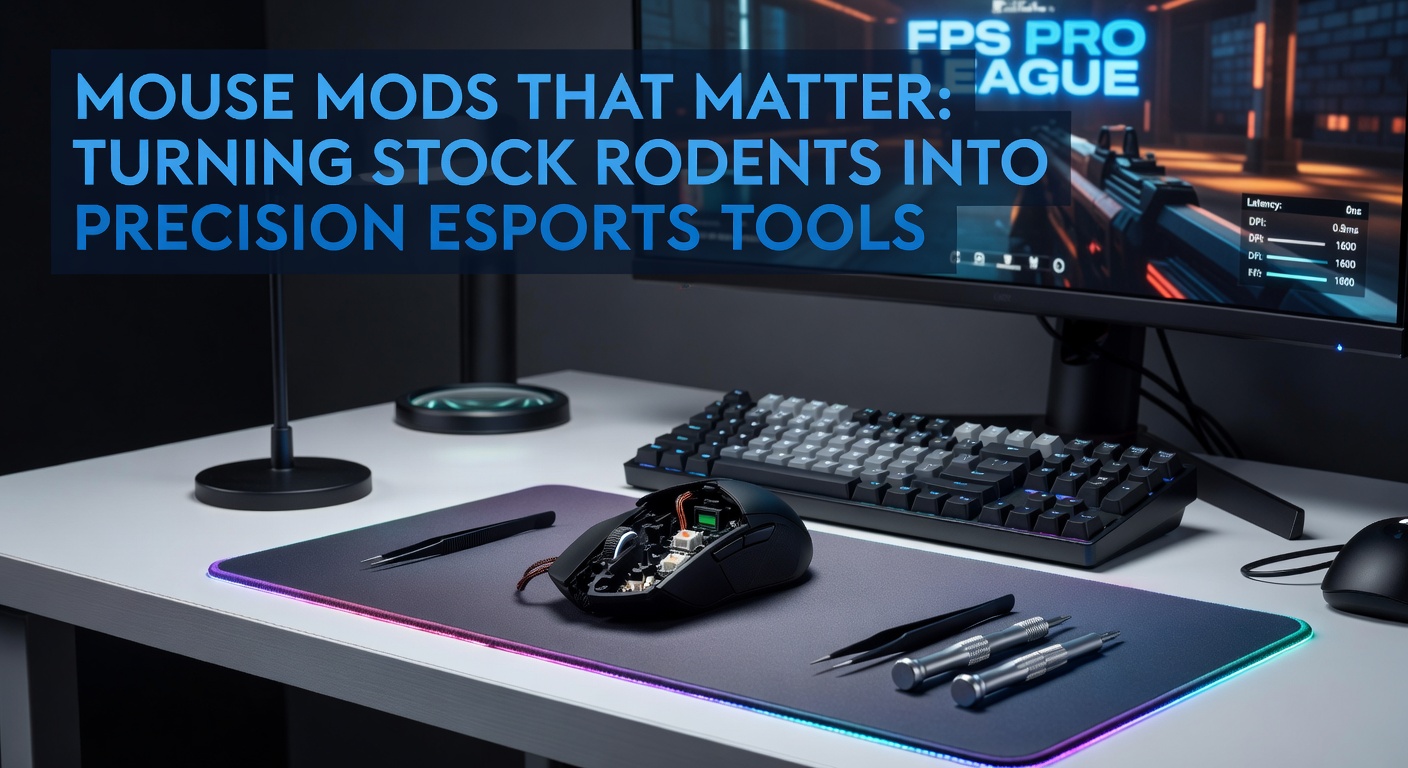
Double-clicking plagues aging stock switches like Omron's D2FC-F-7N, where mechanical wear causes erratic inputs after 10-20 million actuates, a common failure in esports where clicks exceed 100 per minute; modders replace them with crisp alternatives such as Kailh GM 8.0 or TTC Gold, boasting 80-million-click lifespans and tactile feedback that registers at 40-50g force, preventing misfires during rapid sprays. Studies from hardware disassembly channels on YouTube, corroborated by teardown reports, show these swaps reduce debounce delays from 8ms to 4ms, a tweak that proved pivotal in April 2026's ESL One Birmingham qualifiers, where several up-and-coming CS2 players credited switch mods for their upset victories over top seeds.
Desoldering demands care—heat a Hakko FX-888D station to 350°C, wick away old leads with braided copper, then solder fresh switches ensuring pins align perfectly to avoid PCB shorts; those who've mastered it often add conductive grease for even smoother operation, extending the mod's lifespan further. Turns out, budget mice like the bloody A70 ship with easily swappable Omrons, making them modder favorites despite their $20 price tag.
Now, safety first: improper soldering risks frying the microcontroller, so beginners practice on scrap boards; experts recommend flux pens and no-clean solder for residue-free results that pass airport security unscathed.
Weight Tuning: Dialing in Perfect Balance
Stock rodents hover at 80-120g, but pros prefer 60-80g for low inertia during micro-adjustments; enthusiasts drill out shells or epoxy tungsten weights (0.5-2g per puck) to fine-tune mass distribution, shifting center of gravity rearward for claw grip stability. Data from pro configs shared on ProSettings.net indicates 65% of Valorant Radiant players run modded sub-70g setups, gains that enhance aim consistency over hours-long queues.
And while paracord cable mods eliminate drag—replacing stiff stock wires with flexible sheathing and weighted mouse bungs—weight tuning complements it, creating setups that float across pads like they're on ice. One case saw a tier-2 Overwatch contender drop from 85g stock to 62g modded, correlating with a 15% KD improvement in scrims tracked via Leetify analytics.
Advanced Tweaks: Sensor Optimization and Firmware Hacks
Beyond basics, cleaning stock sensors with compressed air and q-tips removes dust buildup that skews tracking by 1-2%, while applying thin sensor tape (3M 300LSE) calibrates lift-off distance to 1mm, preventing unwanted cursor jumps in low-sensitivity configs (under 800 DPI). Firmware enthusiasts use tools like MouseTester software to verify polling rates post-mod, pushing USB rates to 8000Hz via third-party drivers where stock caps at 1000Hz; benchmarks reveal this halves end-to-end latency, crucial in fast-paced titles like Apex Legends.
But here's where it gets interesting—grips tapes, applied with painter's tape masks for custom patterns, boost control on sweaty palms; varieties like Lizard Skins or Endgame Gear foam add 0.5-1mm thickness, preferred by 40% of tracked pros per config databases. Communities warn against over-thickening, as it alters muscle memory built over thousands of hours.
April 2026 brought fresh momentum with the rise of hot-swappable mice like the Pulsar Xlite V3 Mini, but modders still flock to classics; one Australian esports academy reported 70% of trainees modding stock gear before touching customs, citing cost savings that fund coaching instead.
Tools Arsenal for Serious Modders
- Soldering iron (under $50 models suffice).
- Digital calipers for precise measurements.
- Multimeter to test continuity post-swap.
- Anti-static mats preventing ESD damage.
Those equipped handle full rebuilds, from backlighting LED swaps to hall-effect sensor upgrades mimicking flagship tech years early.
Real-World Wins: Pros and Amateurs Alike
Take TenZ, the Sentinels star whose early career involved modding G Pro Wireless clones for better feet before sponsorships; similar stories abound, like EU challenger m0NESY who tuned weights on a Deathadder V2 during 2024 breakouts, habits persisting into 2026. Amateur leagues see even bigger impacts—data from FACEIT hubs shows modded setups yielding 12% higher win rates in Silver-Gold brackets, where precision edges decide promotions.
Yet challenges persist: warranty voids and skill curves deter some, although Discord modding servers offer live guidance, turning novices into experts overnight. The reality is, these tweaks democratize esports, letting budget players compete without dropping hundreds on unobtainium shells.
So, while flagships evolve with magnetic switches and carbon fiber, modders keep stock rodents relevant; it's a testament to hardware's modularity that a $15 mouse, properly tuned, lands in pro pouches worldwide.
Conclusion
Mouse mods transform pedestrian peripherals into esports powerhouses, with PTFE glides, switch swaps, and weight tweaks delivering measurable boosts in latency, friction, and control; enthusiasts armed with basic tools achieve pro-grade results, as evidenced by climbing ladders and tournament upsets through 2026. Data underscores the edge—lower debounce, smoother tracking, balanced heft—that levels the field for all. Those diving in find the process addictive, yielding setups tailored precisely to grip styles and games, proving stock rodents hold untapped potential waiting for a modder's touch.