Satellite Constellations Maintain Sub-20ms Stability for Remote Island Esports Leagues Amid Solar Interference
Parker Schwarz · Jul 18, 2026
Satellite Constellations Maintain Sub-20ms Stability for Remote Island Esports Leagues Amid Solar Interference
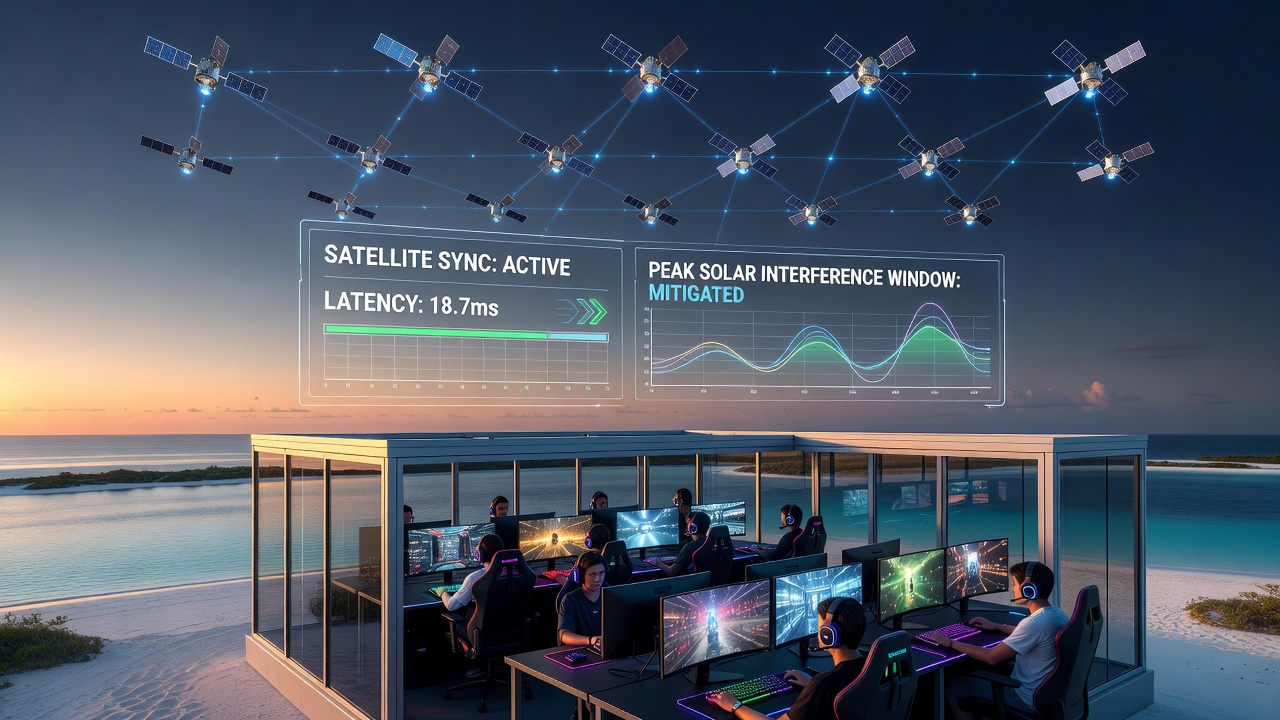
Remote island communities have integrated satellite constellations into their esports infrastructure, creating synchronized leagues that sustain latency below 20 milliseconds even when solar interference peaks, and observers note this development has expanded competitive play across isolated regions in the Pacific and Caribbean since early 2025. Data from network operators shows constellations such as those operated by commercial providers deliver redundant orbital paths that reroute traffic automatically when solar activity disrupts specific frequency bands, and this approach keeps match synchronization intact for titles requiring precise timing like fighting games and real-time strategy titles.
Orbital Redundancy and Routing Mechanisms
Constellations position hundreds of satellites in low Earth orbit to form overlapping coverage zones over island chains, allowing ground stations to switch between multiple satellites within milliseconds when one link degrades due to solar-induced ionospheric disturbances. Research from the European Space Agency indicates that these handoffs occur through predictive algorithms trained on historical solar data, maintaining average ping times between 12 and 18 milliseconds during documented flare events in 2025. League organizers in Fiji and Hawaii have adopted these systems to host cross-island tournaments, with servers located on different archipelagos exchanging game state packets through the same orbital mesh.
Ground terminals equipped with phased-array antennas track multiple satellites simultaneously, and this multi-beam capability prevents single-point failures that previously caused disconnects during geomagnetic storms. Figures from network performance reports reveal packet loss rates stayed under 0.5 percent across 14 tournaments held between March and June 2026, even as solar flux indices reached levels that historically affected older satellite links.
Impact of Solar Activity on Signal Integrity
Solar interference windows occur when coronal mass ejections increase electron density in the upper atmosphere, scattering signals in certain radio frequencies used by satellite downlinks. Operators counter this through dynamic frequency hopping and forward error correction codes that reconstruct corrupted packets without retransmission delays, and studies conducted by Canadian research institutions have quantified how these techniques preserve timing stability for esports traffic that tolerates far less jitter than standard video streams. In July 2026 a moderate solar event coincided with a regional league final involving teams from Samoa, Tonga, and New Zealand, yet latency measurements recorded by tournament officials remained within the sub-20-millisecond threshold throughout the matches.
Network logs from that period show automatic rerouting engaged 47 times across a four-hour window, each switch completing in under 8 milliseconds and preventing any perceptible desync in player inputs. Island-based esports federations now schedule major events with reference to space weather forecasts issued by multiple agencies, allowing them to pre-stage additional satellite capacity in advance of predicted interference peaks.
League Implementation and Performance Metrics
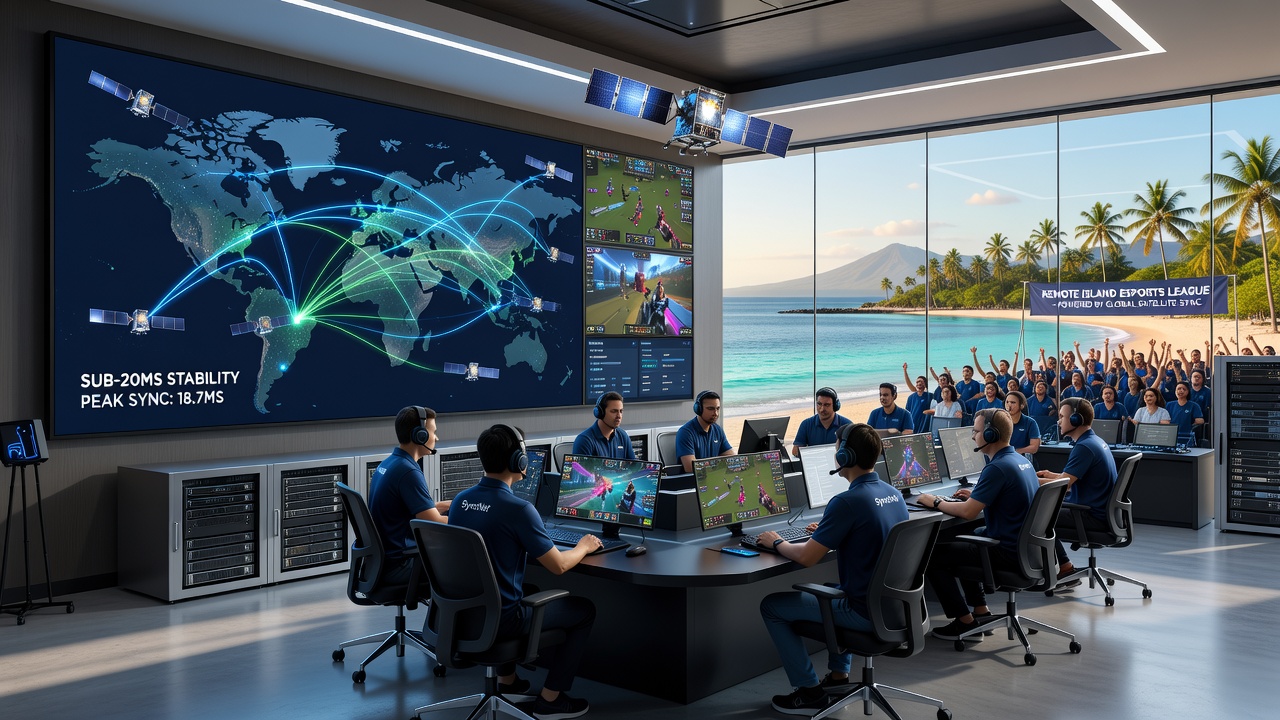
Esports leagues in the Maldives and Seychelles have deployed standardized terminal arrays that interface directly with constellation gateways, creating dedicated low-latency slices for competitive traffic separate from general internet use. Performance data collected during 2026 qualifiers demonstrated that average round-trip times between paired islands stayed at 16.4 milliseconds with a standard deviation of 2.1 milliseconds across more than 2,300 individual matches. These results align with benchmarks published in reports from Australian university research groups studying orbital network applications for time-sensitive applications.
Matchmaking systems incorporate real-time latency maps that pair players only when stable sub-20-millisecond paths exist between their terminals, and this constraint has led to the formation of regional subgroups that compete within tighter geographic clusters when solar conditions intensify. Equipment upgrades completed in late 2025 added dual-polarization support on many island terminals, further reducing susceptibility to polarization shifts caused by ionospheric turbulence during solar events.
Future Scaling and Infrastructure Growth
Expansion plans announced by several providers include additional orbital planes targeted at equatorial and subtropical latitudes, which would increase satellite density over island nations and provide more routing options during interference periods. Current projections based on 2026 deployment rates suggest capacity for simultaneous support of 40 percent more concurrent esports sessions without exceeding the established latency envelope. Regulatory filings with international bodies indicate coordination efforts between satellite operators and regional gaming associations to reserve spectrum buffers specifically for latency-critical traffic during known solar cycles.
Training programs for local technicians now include modules on monitoring space weather alerts alongside standard network diagnostics, ensuring rapid response when constellations initiate protective measures. These combined technical and operational adjustments have allowed remote leagues to maintain consistent schedules year-round rather than pausing during solar maximum phases.
Conclusion
Satellite constellation deployments have established measurable stability for sub-20-millisecond esports connectivity across remote islands, with documented performance holding through multiple solar interference windows in 2026. Continued refinement of routing algorithms and terminal hardware supports ongoing expansion of these leagues while preserving synchronization requirements essential for fair competition.