Shedding Light on Post-Processing Effects: Their Influence on Visibility in Competitive First-Person Shooters
Parker Schwarz · May 16, 2026
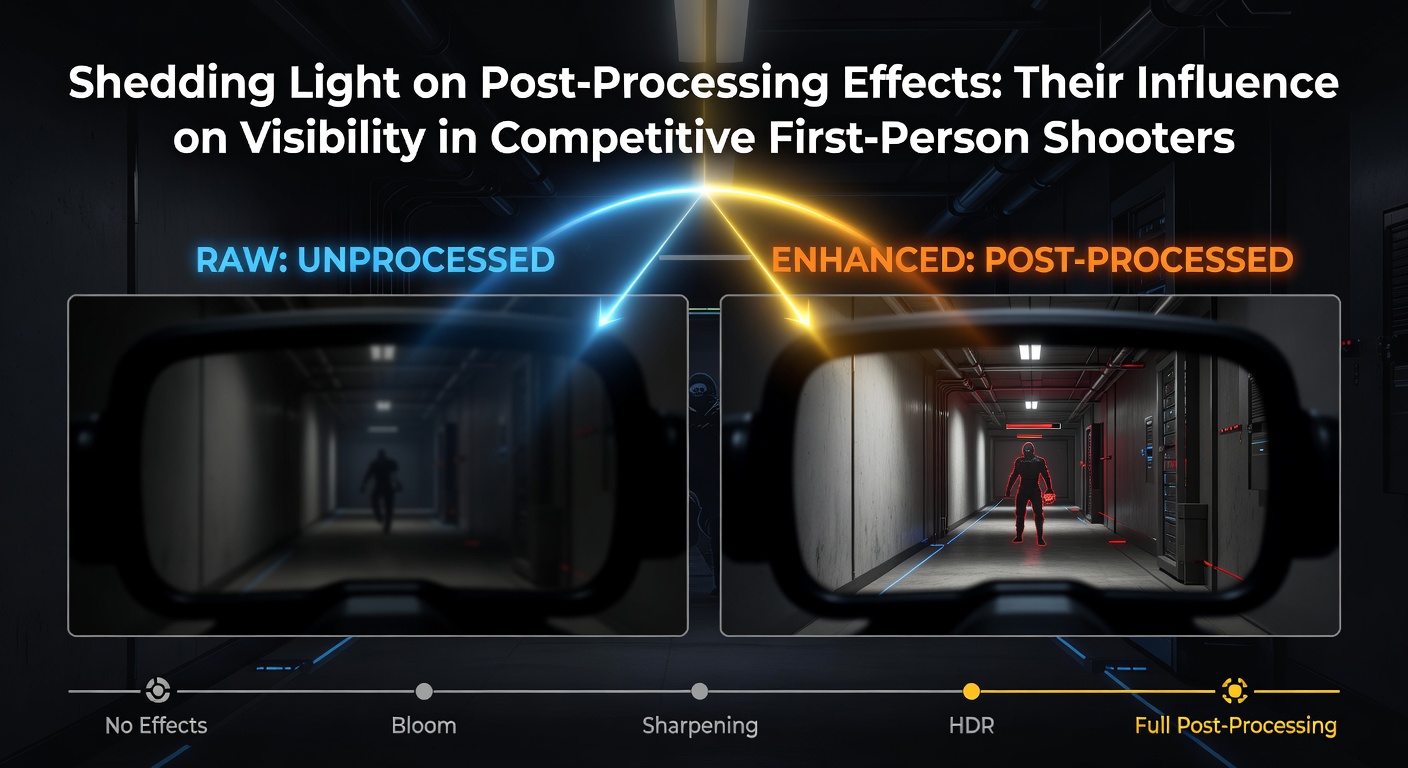
Shedding Light on Post-Processing Effects: Their Influence on Visibility in Competitive First-Person Shooters
Post-processing effects in competitive first-person shooters shape how players perceive the game world through layers of visual filters applied after the initial render pass. These techniques encompass bloom, motion blur, depth of field, color grading, and ambient occlusion, each of which alters pixel data to simulate realistic lighting and camera behavior. In titles like Counter-Strike 2 and Valorant, developers integrate these effects to enhance immersion, yet they frequently reduce the clarity required for rapid target acquisition during matches. Observers note that the balance between aesthetic appeal and functional visibility remains a persistent point of discussion among players and analysts alike.
Core Components of Post-Processing in FPS Engines
Modern game engines apply post-processing through dedicated shader passes that operate on the final framebuffer, which means adjustments occur after geometry and lighting calculations complete. Bloom creates glowing halos around bright sources, while motion blur simulates camera movement by averaging frames over time, and depth of field blurs distant or near-field elements based on focal distance. Color grading applies lookup tables to shift hue and contrast, often making environments appear more cinematic. Researchers from the University of Waterloo have documented how these layers compound to lower contrast ratios in high-motion scenarios, directly affecting the time players need to identify opponents.
Engine-specific implementations vary significantly across titles. Source 2 in Counter-Strike 2 uses a refined bloom system that reacts to dynamic light sources, whereas Unreal Engine 5 variants in other shooters introduce temporal upsampling that interacts with anti-aliasing techniques. Data indicates that when bloom intensity exceeds certain thresholds, peripheral vision cues become obscured, which forces players to rely more heavily on audio positioning instead of visual scanning. And because competitive rulesets often restrict graphic settings, many teams standardize configurations to minimize these variables during tournaments.
Visibility Challenges in High-Stakes Matches
Competitive environments demand consistent sightlines across diverse maps, yet post-processing can introduce inconsistencies that favor certain hardware configurations. Depth of field, for instance, softens background details that might otherwise reveal enemy movement at range, while ambient occlusion darkens crevices and corners where players frequently seek cover. Studies conducted by the European Association for the Study of Games found measurable drops in detection accuracy when motion blur remained enabled during rapid turns, prompting organizations to recommend its complete deactivation in player configs. What's interesting is how these effects scale differently on various GPUs, creating situations where identical in-game settings yield divergent results depending on driver versions and monitor refresh rates.
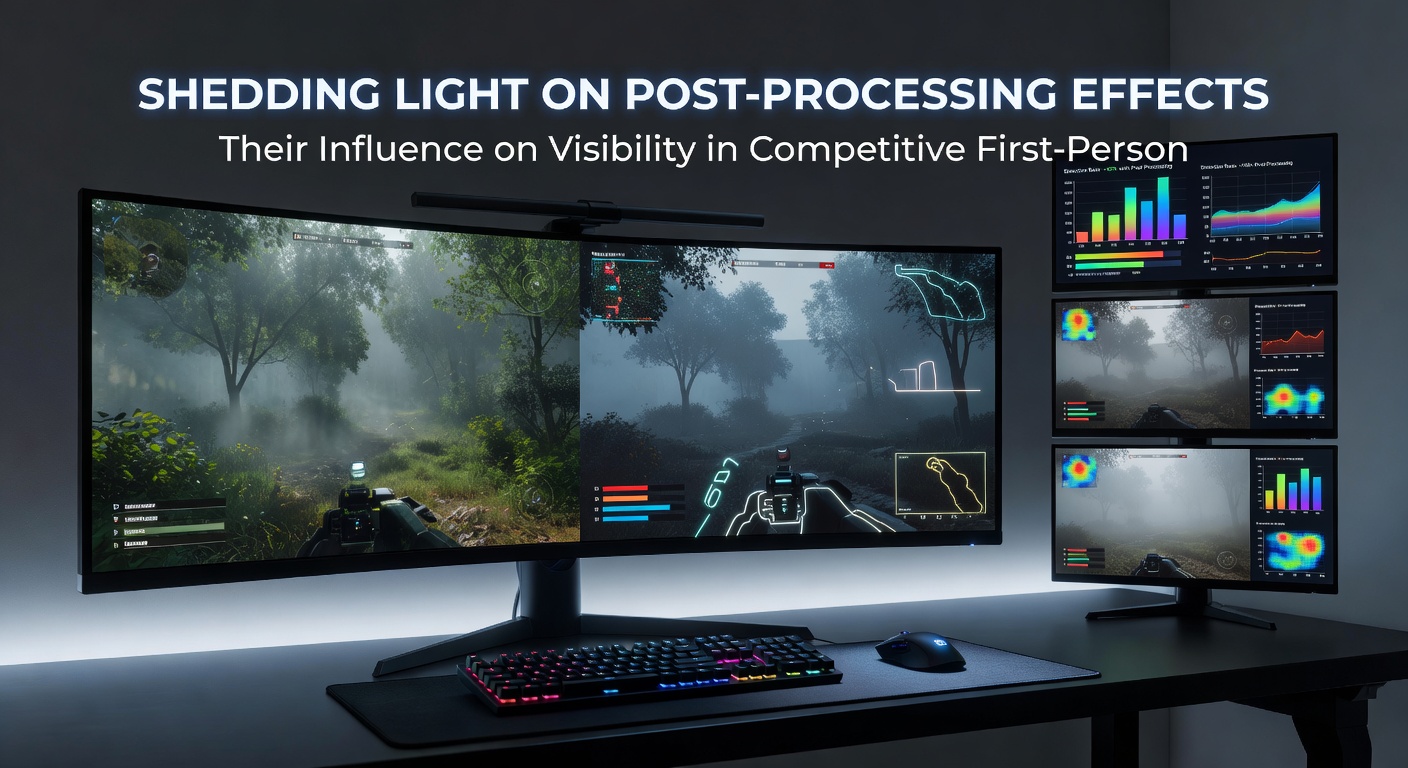
Tournament organizers in May 2026 addressed these concerns during the Global Esports Championship qualifiers by mandating specific graphics profiles that disabled non-essential post-processing layers. This decision followed reports from multiple regions showing performance variances tied to visual fidelity options. Teams adapted by testing configurations on practice servers, focusing on maximizing edge contrast without sacrificing frame stability. The approach proved effective in reducing instances where subtle enemy outlines blended into processed backgrounds, particularly on maps featuring heavy volumetric fog.
Hardware and Software Interactions
Graphics drivers play a substantial role in modulating post-processing impact because they control how shaders execute on available silicon. NVIDIA's control panel allows selective overrides for certain effects, while AMD's equivalent tools provide comparable granularity through Radeon Software. Observers tracking professional setups report that players often pair these overrides with custom resolution scaling to sharpen distant textures that post-processing tends to soften. Figures from the Australian Centre for Digital Gaming Research reveal that such tweaks can improve target acquisition speed by measurable margins when applied consistently across a roster.
Software overlays and monitoring tools further influence outcomes by adding their own compositing layers, which sometimes amplify or counteract in-game filters. Players coordinate these elements through shared configuration files that undergo iterative refinement before major events. The process involves cross-referencing visibility metrics gathered during scrimmages with hardware telemetry, ensuring that no single post-processing artifact creates exploitable blind spots on any map rotation.
Future Considerations and Standardization Efforts
Industry groups continue exploring guidelines that could harmonize post-processing defaults across major titles, drawing input from hardware vendors and competitive leagues. These initiatives focus on establishing baseline visibility standards that accommodate varying monitor technologies without forcing players into extreme configuration tweaks. As engines evolve toward greater photorealism, the tension between visual richness and competitive clarity is expected to persist, requiring ongoing collaboration between developers and the esports community.
Conclusion
Post-processing effects remain integral to the visual identity of competitive first-person shooters, yet their influence on visibility necessitates deliberate management through settings, hardware choices, and organizational policies. Data from multiple studies underscores how specific filters can impede rapid perception, prompting standardized approaches that prioritize clarity. As the scene advances into 2026 and beyond, continued refinement of these elements supports fairer play conditions while preserving the atmospheric qualities that define modern titles.