The Intricacies of Frame Pacing Algorithms and Their Role in Stabilizing Performance Across Variable Server Tick Rates in Persistent Online Worlds
Henrik Bennett · May 18, 2026
The Intricacies of Frame Pacing Algorithms and Their Role in Stabilizing Performance Across Variable Server Tick Rates in Persistent Online Worlds
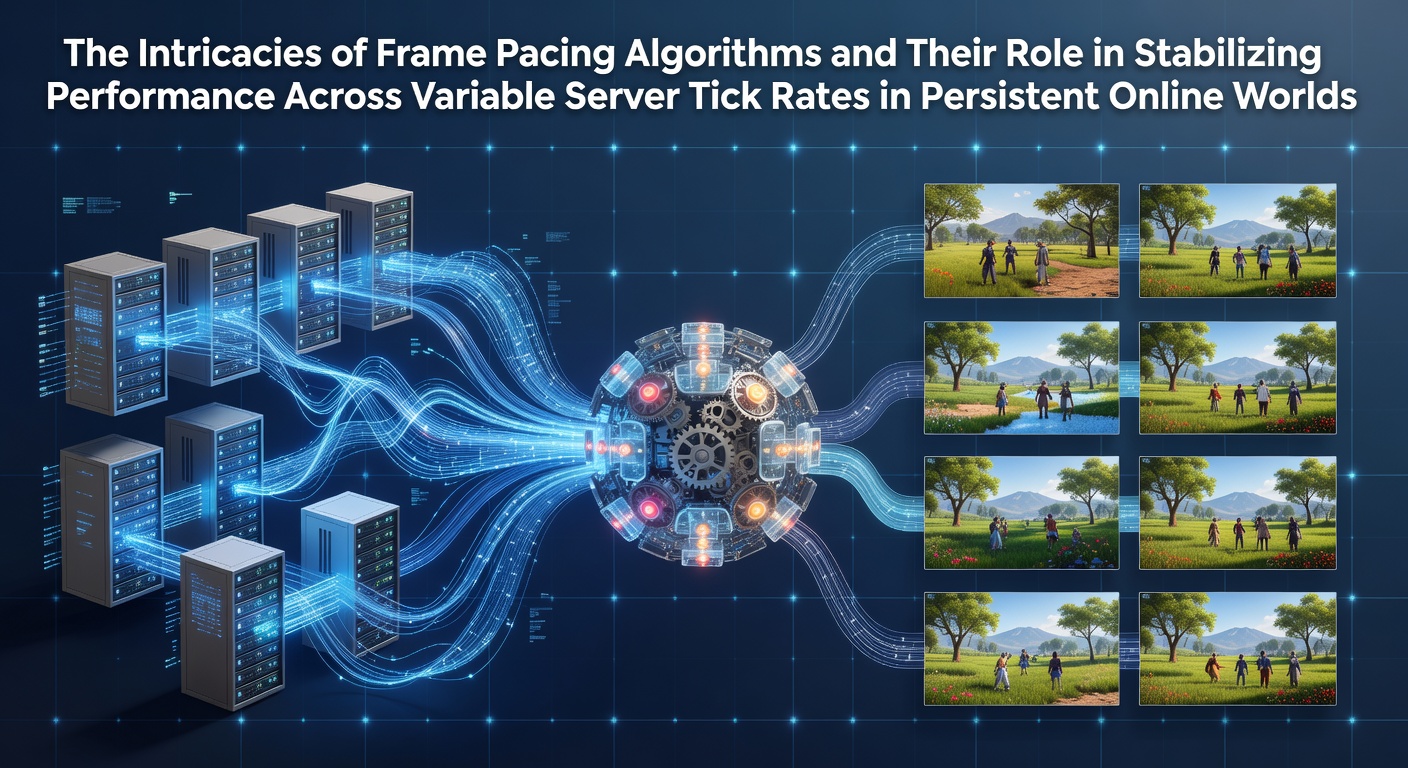
Frame pacing algorithms manage the delivery of rendered frames to maintain consistent visual output even when server tick rates fluctuate in large-scale persistent online environments. These systems work by buffering client predictions and adjusting interpolation windows so that players experience smooth motion despite inconsistencies in data arrival from authoritative servers. Developers implement them in titles that support thousands of concurrent users where network conditions shift constantly due to player density and world events.
Understanding Core Mechanisms Behind Frame Pacing
Frame pacing relies on timestamp synchronization between client and server states while the client renders intermediate positions using data received from previous ticks. Algorithms calculate ideal frame intervals based on historical tick patterns and apply smoothing filters to prevent abrupt jumps when a tick arrives late or gets skipped entirely. Research from institutions such as the University of Waterloo shows that effective pacing reduces perceived stutter by aligning render calls with variable input rates rather than forcing fixed intervals.
Developers often combine these pacing routines with client-side prediction layers that forecast entity movements until corrected by the next authoritative update. When tick rates drop below nominal values such as 30 Hz during peak activity periods the algorithms extend extrapolation buffers proportionally to avoid visual artifacts. This approach keeps character animations and environmental interactions coherent across sessions that span multiple hours or days.
Variable Server Tick Rates in Persistent Worlds
Persistent online worlds adjust tick rates dynamically to balance computational load across distributed server clusters. During intense battles or large-scale migrations the authoritative simulation may throttle to 20 Hz or lower while background regions continue at higher frequencies. Frame pacing compensates by stretching the client's interpolation timeline so that motion remains fluid without introducing excessive latency in player inputs.
Engineers monitor these variations through telemetry that logs tick interval distributions and correlate them with frame delivery statistics. Data collected from European server farms indicates that pacing adjustments become critical once tick variance exceeds 15 percent because uncompensated clients begin to display rubber-banding or desynchronized actions. Algorithms therefore sample recent tick history and apply low-pass filters to predict upcoming intervals before rendering each frame.
Algorithmic Techniques for Performance Stabilization
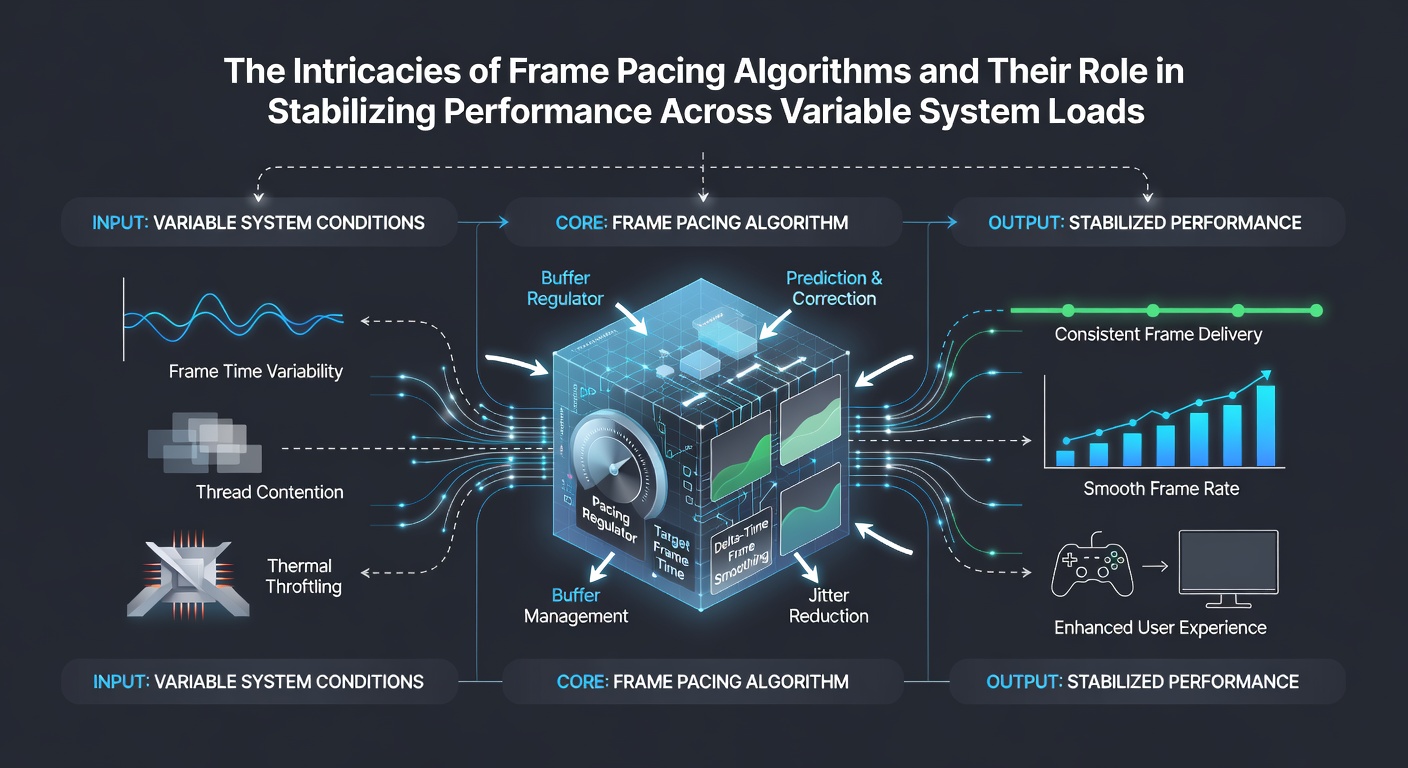
Modern implementations use adaptive buffer sizing that grows or shrinks based on observed jitter patterns. One common method calculates a rolling average of tick arrival times then sets the render target interval slightly ahead of the mean to absorb occasional delays. Another technique employs phase-locked loops similar to those found in audio hardware to gradually steer the client's frame cadence toward the server's rhythm without sudden corrections.
According to reports from the Interactive Software Federation of Europe pacing routines also integrate with network prediction rollback systems so that corrected states blend smoothly rather than snapping into place. This blending occurs over several frames using weighted interpolation curves that prioritize recent authoritative data while preserving momentum from predicted states. Observers note that such methods prove especially useful in worlds where server regions migrate between hardware instances during maintenance windows or load balancing events.
Real-World Applications and Recent Developments
In May 2026 several major persistent world platforms rolled out updated pacing modules that leverage machine learning models trained on months of tick telemetry. These models forecast congestion periods and pre-adjust client buffers before players encounter them. The changes allow smoother transitions when tick rates shift from 60 Hz in quiet zones to 15 Hz in contested areas without requiring manual configuration from users.
Engineers at studios supporting cross-region play have documented how pacing interacts with regional latency differences. By maintaining separate interpolation windows per server shard the client can render accurate positions even when one shard operates at reduced frequency while another maintains full speed. Figures from academic studies conducted at Australian universities reveal that optimized pacing can cut visible frame variance by up to 40 percent under simulated high-load conditions.
Challenges and Ongoing Refinements
Despite advances frame pacing still encounters edge cases when sudden network partitions occur or when servers perform emergency rollbacks. Algorithms must detect these anomalies quickly and either pause interpolation or switch to pure extrapolation modes until stability returns. Teams continue to refine detection thresholds using live data streams rather than static rulesets.
What's interesting is how pacing layers now coordinate with graphics drivers to align presentation timing with display refresh rates. This coordination prevents tearing while preserving the temporal accuracy required for competitive interactions. Continued monitoring through industry telemetry programs helps identify patterns that inform future algorithm updates across different engine architectures.
Conclusion
Frame pacing algorithms serve as essential intermediaries between variable server tick rates and consistent client rendering in persistent online worlds. Through adaptive buffering prediction blending and telemetry-driven forecasting they enable stable performance despite fluctuating simulation frequencies. As development practices evolve in 2026 and beyond these systems remain central to delivering coherent experiences across expansive shared environments where network and computational loads change continuously.