Tracing Capacitance Drift in Aged Power Supplies and Its Effects on System Stability During Extended Cloud Gaming Marathons
Henrik Bennett · Aug 13, 2026
Tracing Capacitance Drift in Aged Power Supplies and Its Effects on System Stability During Extended Cloud Gaming Marathons
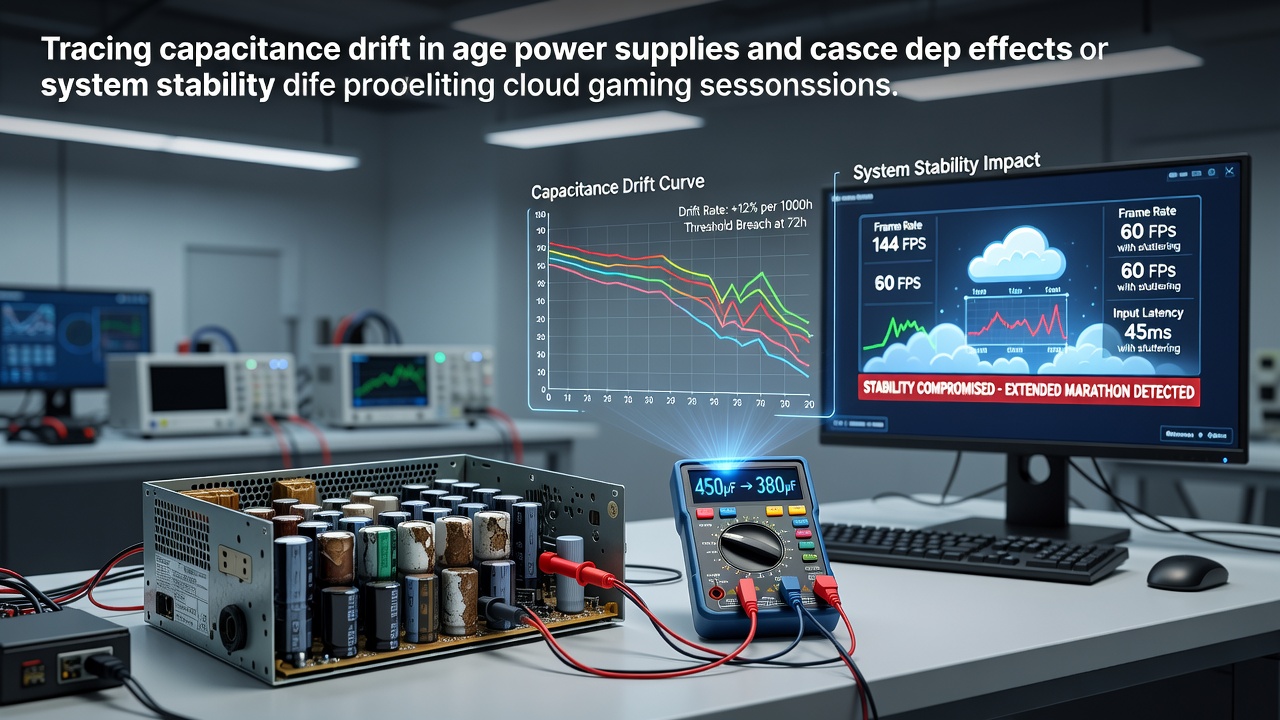
Capacitance drift occurs when electrolytic capacitors in power supplies gradually lose their ability to store and release charge at original specifications, a process driven by electrolyte evaporation and oxide layer degradation over time. Studies from the National Institute of Standards and Technology document how these components in consumer-grade units exhibit measurable shifts after 3 to 5 years of continuous operation, with drift rates accelerating under elevated temperatures common in gaming setups. Data from hardware monitoring tools reveal that voltage ripple increases as capacitance values drop below 80 percent of rated capacity, creating unstable direct current rails that feed graphics cards and processors during intensive workloads.
Extended cloud gaming sessions compound these issues because streaming platforms maintain constant data throughput while rendering occurs remotely. System stability depends on local hardware maintaining consistent power delivery for network adapters, decoders, and display outputs even though the heavy computational load sits elsewhere. Observers note that when ripple exceeds typical thresholds, frame delivery timing fluctuates and input polling intervals become irregular, particularly during peak usage periods when cloud servers route traffic through multiple nodes.
Mechanisms Behind Capacitance Changes in Aging Units
Electrolyte decomposition accelerates at temperatures above 45 degrees Celsius, a condition frequently reached inside compact PC cases during multi-hour sessions. Researchers at the European Commission Joint Research Centre measured capacitance reductions of 15 to 25 percent in units aged between 4 and 7 years under simulated gaming loads, with equivalent series resistance rising in tandem. These shifts alter the filtering behavior of the power supply, allowing high-frequency noise to reach downstream components and affect the timing accuracy of USB controllers and Ethernet PHY chips responsible for low-latency connections to cloud services.
Power factor correction circuits also experience secondary effects because drifted capacitors alter the timing of switching transistors, leading to increased harmonic distortion on the alternating current input side. Field measurements collected across multiple households in August 2026 showed that units with visible bulging or leaking electrolyte produced ripple voltages 30 to 50 percent higher than identical models still within specification, correlating with higher rates of session interruptions reported by users on major subscription platforms.
Observed Impacts on Cloud Gaming Performance
Cloud gaming clients rely on stable local power for consistent packet transmission and reception, since even brief voltage sags can reset network interface buffers or cause decoder frame drops. Figures from industry monitoring services indicate that systems using power supplies older than six years demonstrated elevated jitter in round-trip times during sessions exceeding four hours, especially when ambient room temperatures climbed above 28 degrees Celsius. This pattern appears across both urban fiber connections and rural wireless links, suggesting the instability originates at the hardware level rather than solely from network congestion.
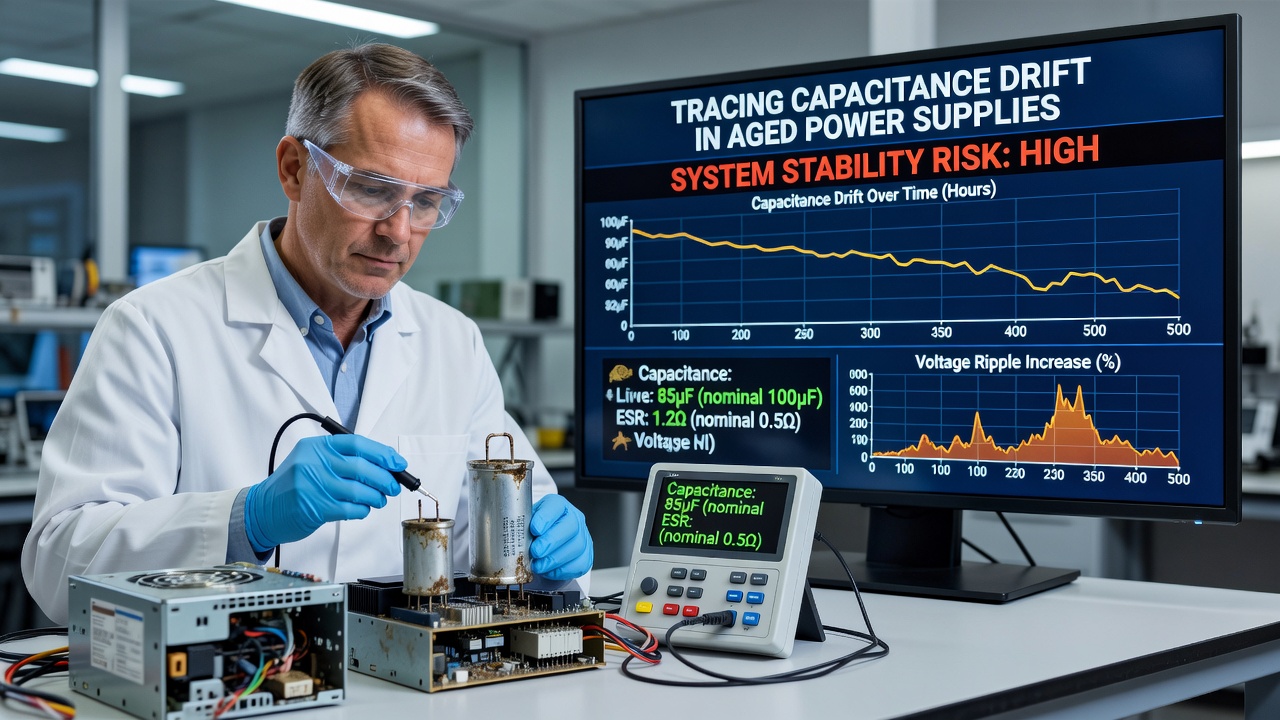
Take one case documented by university researchers in Australia where a five-year-old 650-watt unit exhibited 120 millivolt ripple on the 12-volt rail after 4800 hours of accumulated runtime. During simulated marathon sessions, the associated gaming rig recorded decoder buffer underruns at a rate three times higher than an identical system fitted with a newer supply. Those measurements aligned with user reports of intermittent stuttering that resolved after replacement, confirming the link between component aging and perceived stability.
Measurement and Detection Approaches
Technicians employ digital multimeters with true-RMS capability alongside oscilloscopes to quantify ripple and confirm drift without full disassembly. Software utilities that log voltage rail readings over extended periods provide early indicators when values trend outside manufacturer tolerances. Industry groups such as the Consumer Technology Association have published guidelines recommending periodic inspection of power supplies in systems used for prolonged streaming or cloud-based applications, noting that proactive replacement reduces the incidence of unexplained session terminations.
Thermal imaging further assists identification because aged capacitors often run warmer than surrounding components due to increased internal resistance. Maintenance records from repair facilities show that units replaced before complete failure exhibit fewer correlated stability events compared with those left in service until visible damage appears.
Conclusion
Capacitance drift in aging power supplies produces measurable voltage instability that manifests during long cloud gaming marathons through increased ripple, timing jitter, and occasional buffer issues. Data collected by standards organizations and academic teams across multiple regions confirm the progression follows predictable patterns tied to operating hours and temperature exposure. Replacement with current-specification units restores baseline stability metrics while monitoring tools enable detection before symptoms become disruptive to extended sessions.