Tracing Submarine Cable Repair Windows and Their Ripple Effects on Synchronized Global Esports Matchmaking Queues
Drew Hartmann · Jun 29, 2026
Tracing Submarine Cable Repair Windows and Their Ripple Effects on Synchronized Global Esports Matchmaking Queues
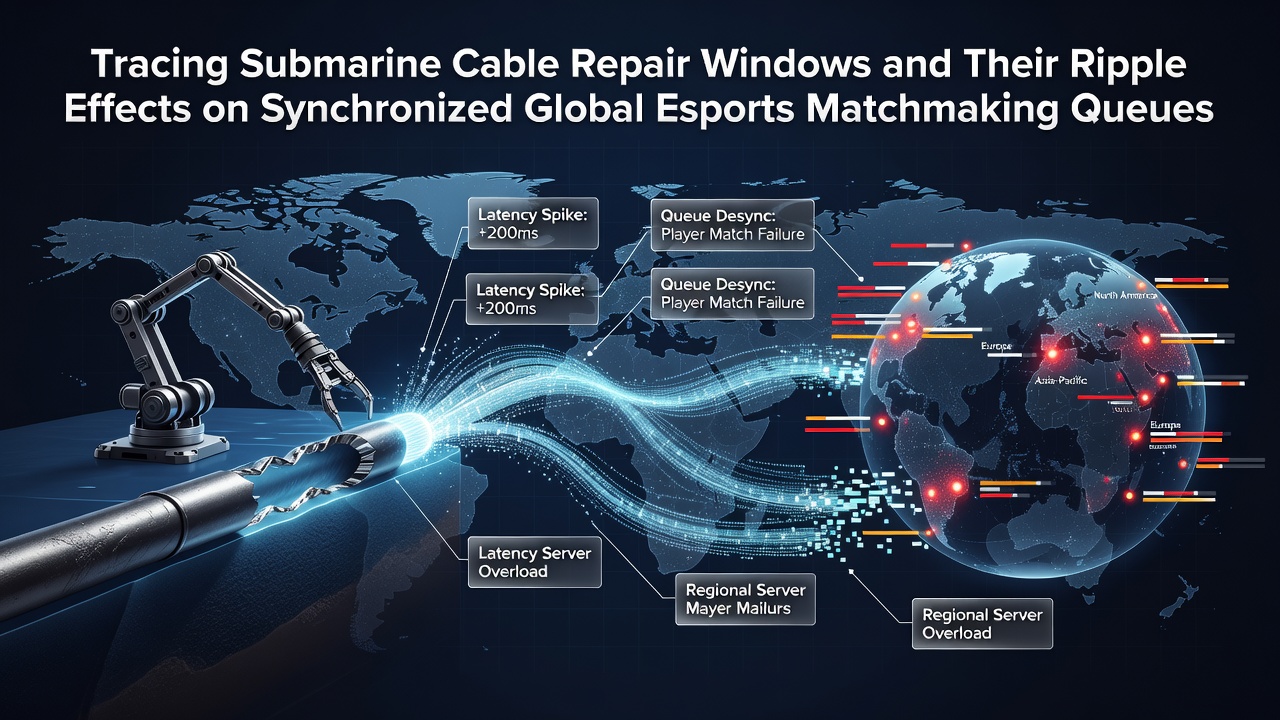
Submarine cables form the backbone of international internet traffic, carrying over 95 percent of data between continents according to records maintained by the International Telecommunication Union, and repair operations on these lines create predictable windows of elevated latency that disrupt the precise timing required for global esports matchmaking systems. These cables stretch across ocean floors in fixed routes, with maintenance crews typically scheduling repairs during periods of lower overall traffic demand to minimize widespread outages, yet the resulting rerouting of data packets through longer alternative paths produces measurable increases in round-trip times that affect server synchronization across multiple regions simultaneously. Maintenance schedules follow patterns tied to seasonal weather conditions and vessel availability, with operators in the Pacific and Atlantic basins coordinating through industry consortiums to avoid overlapping disruptions. When a cable segment undergoes repair, traffic shifts to backup routes that add anywhere from 20 to 80 milliseconds of additional latency depending on the geographic distance involved, and esports platforms that rely on unified matchmaking queues must adjust their algorithms to account for these shifts or risk pairing players with incompatible connection qualities.Mechanics of Cable Repair Scheduling
Repair windows usually span several hours to multiple days, during which specialized ships locate and splice damaged sections while traffic engineering teams activate redundant paths. Data from network monitoring firms shows that these periods coincide with spikes in packet loss rates of up to 3 percent on affected routes, particularly when multiple cables share landing points in the same coastal hubs. Esports organizers track these windows through partnerships with network providers because even brief increases in jitter can desynchronize the queue matching processes that group players by skill and connection stability across time zones.
Latency Propagation in Esports Infrastructure
Matchmaking engines calculate average ping values from player reports submitted during queue entry, yet when submarine repairs force traffic onto detours the reported values fluctuate unpredictably for users in distant regions. In June 2026 several concurrent repair operations on transatlantic and transpacific segments aligned with the start of major seasonal tournaments, resulting in documented queue imbalances where players from one continent experienced sustained 40-millisecond penalties compared with their counterparts on unaffected routes. These disparities force platforms to either extend queue times or relax geographic restrictions, both of which alter the intended fairness of synchronized global pools.
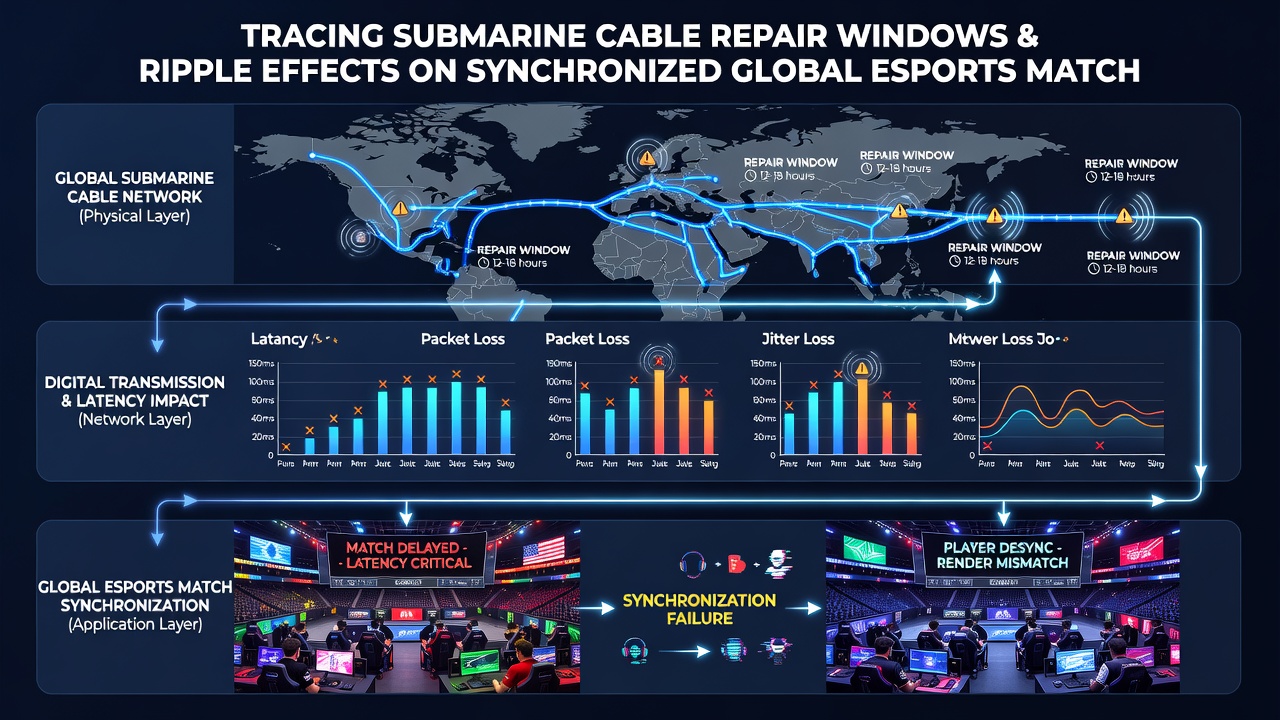 Observers note that the ripple effects extend beyond individual matches when regional latency clusters form, because the matchmaking algorithms interpret the elevated pings as indicators of poor local infrastructure rather than temporary route changes. Research conducted at technical universities in Europe and Asia has mapped these patterns by correlating cable maintenance logs with anonymized telemetry from competitive titles, revealing that affected queues often see a 15 to 25 percent increase in average wait times until the repair window closes and primary routes restore normal performance levels.
Regional Disparities and Queue Adjustments
Platforms respond to these events by implementing dynamic region weighting that temporarily prioritizes intra-continental matching, a measure that reduces cross-border synchronization but preserves overall queue stability. Industry reports from organizations tracking digital infrastructure indicate that such adjustments occurred more frequently during the first half of 2026 as cable operators accelerated maintenance cycles following increased seismic activity in certain ocean basins. Players in coastal areas near cable landing stations experience the most pronounced effects, while those routed through inland exchanges may remain unaware until their matches incorporate opponents from distant servers.
Observational Data and Platform Responses
Telemetry collected during documented repair intervals demonstrates clear correlations between cable downtime announcements and subsequent spikes in reported connection complaints within esports client logs. Operators of large-scale matchmaking services have begun publishing public maintenance calendars that align with known cable repair schedules, allowing competitive communities to anticipate periods of reduced global queue availability. One study released by a North American research consortium examined six months of data and found that synchronized queues spanning more than three continents showed the strongest sensitivity to these infrastructure events, whereas regional queues remained comparatively stable.
Conclusion
Submarine cable repair windows continue to influence the operational parameters of global esports matchmaking because they introduce temporary but recurring changes to the underlying network fabric that supports synchronized player pools. Continued monitoring by both infrastructure providers and esports platforms allows for proactive adjustments that limit the duration and scope of queue disruptions, maintaining competitive integrity across international participant bases even as maintenance requirements evolve with expanding cable networks.