Tracking the Evolution of Anti-Cheat Mechanisms Through Machine Learning in Persistent Online Shooter Communities
Henrik Bennett · Jun 6, 2026
Tracking the Evolution of Anti-Cheat Mechanisms Through Machine Learning in Persistent Online Shooter Communities
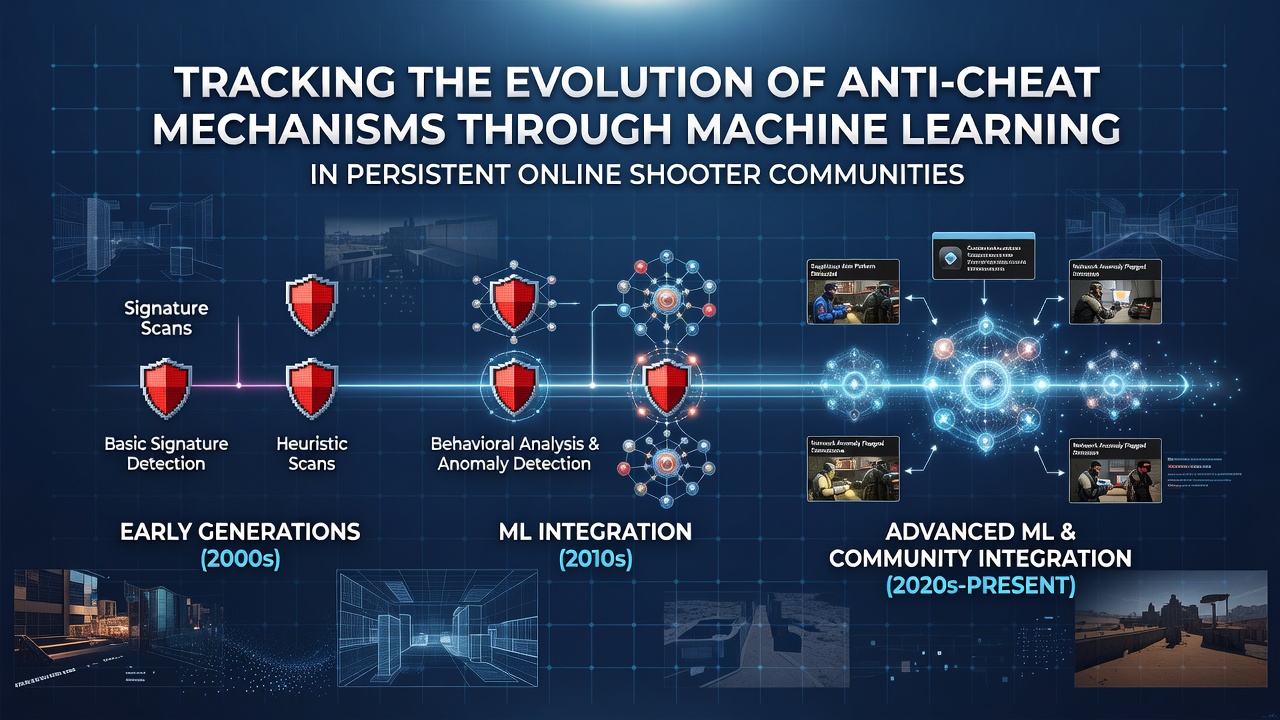
Persistent online shooter communities have faced ongoing challenges with cheating since the early days of multiplayer gaming, yet the integration of machine learning has transformed detection capabilities over the past decade. Developers began incorporating basic statistical analysis in the 2010s before shifting toward more sophisticated algorithms that process vast datasets from player interactions in titles like Counter-Strike and Valorant.
Early Approaches to Detection
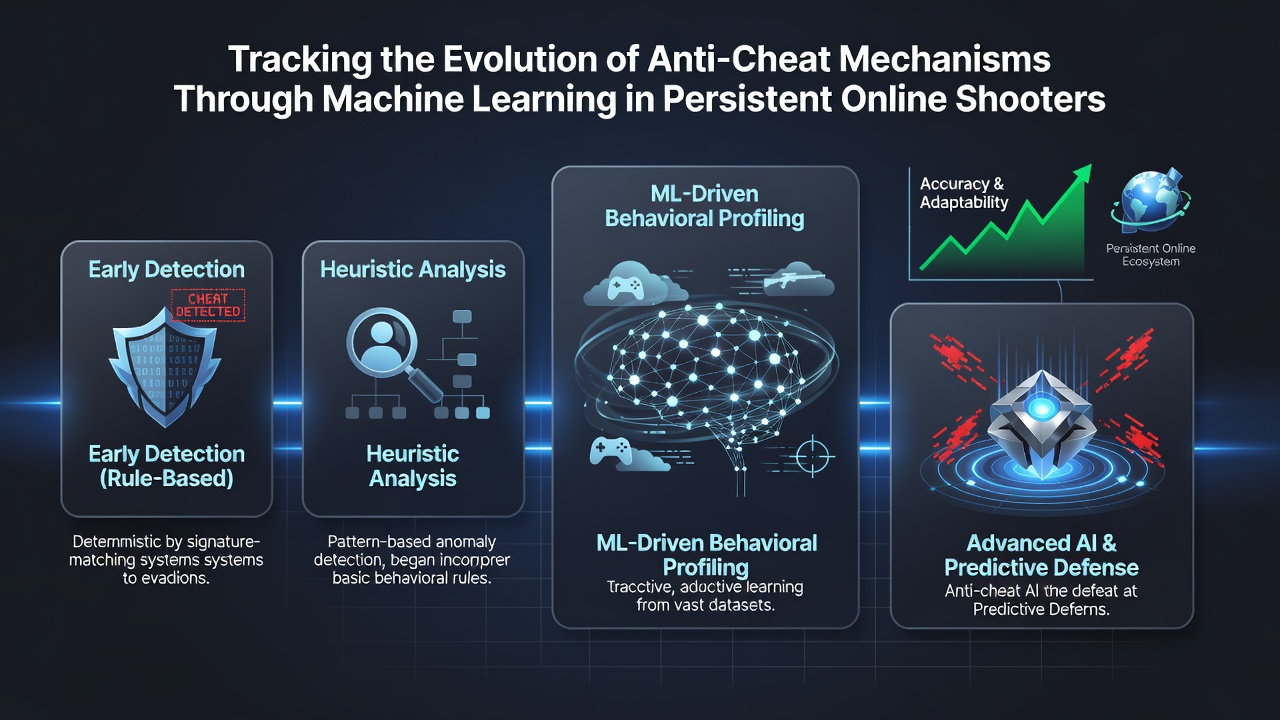
Initial anti-cheat systems relied on signature-based methods that flagged known cheat software through file checks and memory scans, while these tools caught many blatant violations but struggled against customized or rapidly updated hacks. Researchers at various institutions documented how manual reviews by moderators supplemented these systems until data volumes grew too large for human teams to handle efficiently.
Shift Toward Machine Learning Integration
Machine learning entered the picture as companies collected telemetry on movement patterns, aim precision, and decision-making speed across millions of matches. Algorithms trained on labeled datasets learned to distinguish between exceptional human skill and automated assistance, and this transition accelerated around 2018 when major studios partnered with AI specialists. Data from game servers showed reductions in reported incidents after initial deployments, though false positives required ongoing model refinements through feedback loops from player reports.
Key Techniques in Modern Systems
Contemporary implementations use supervised learning models that classify behaviors based on features such as recoil control consistency and target acquisition times, whereas unsupervised approaches cluster unusual activity for further investigation. Reinforcement learning components adapt to new cheat methods by simulating player versus bot scenarios in controlled environments. Persistent communities benefit because these systems operate continuously without requiring constant manual updates, and integration with server tick rates allows real-time flagging during active sessions.
One study from academic sources highlighted how neural networks processed input logs to identify aimbots with over 95 percent accuracy in controlled tests, while another project focused on behavioral biometrics that tracked mouse movement entropy to separate legitimate players from those using scripts. These advancements coincided with the rise of cloud-based processing that offloaded analysis from client machines.
Community-Specific Adaptations
Long-running shooter servers developed custom ML pipelines that account for regional playstyles and ping variations, since models trained on global data sometimes misclassified high-latency but skilled players from certain areas. Organizations such as the Entertainment Software Association have noted collaborative efforts among studios to share anonymized training datasets, which improves cross-game detection without compromising individual privacy protocols. In June 2026 updates rolled out across major platforms incorporated federated learning techniques that allowed models to train locally on player hardware before aggregating insights centrally.
Challenges and Refinements
Persistent communities continue to encounter issues with adversarial attacks where cheaters deliberately feed misleading data to degrade model performance, yet developers counter this through ensemble methods that combine multiple detection layers. Research published by institutions in the European Union and Australia demonstrates that combining temporal analysis with spatial tracking yields more robust results against evolving threats. Observers note that transparent communication from developers about detection criteria helps maintain trust, even as exact algorithms remain proprietary to prevent exploitation.
Figures from industry reports reveal that ML-driven systems now handle the majority of initial screenings in large-scale titles, freeing human teams to focus on edge cases and appeals processes. Those who manage community servers report smoother operations when automated tools integrate with existing moderation bots.
Conclusion
The evolution of anti-cheat through machine learning reflects broader trends in data-driven security across digital platforms, and ongoing refinements ensure these mechanisms keep pace with community growth. As shooter titles expand their persistent worlds, the focus remains on balancing effective detection with fair play standards that support diverse player bases worldwide.