Undersea Cable Routes Shape Sync Reliability in Worldwide Cooperative Gaming Sessions
Parker Schwarz · Jul 27, 2026
Undersea Cable Routes Shape Sync Reliability in Worldwide Cooperative Gaming Sessions
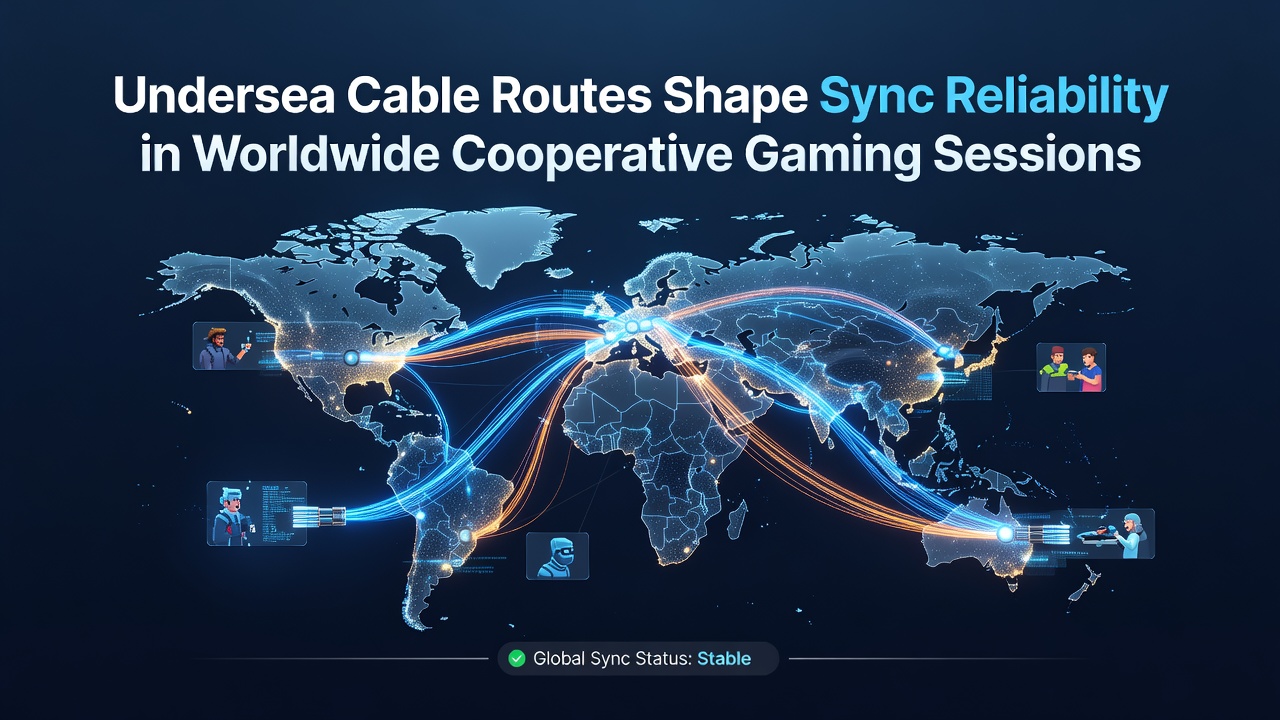
Undersea fiber optic cables form the backbone of international data transmission, and their physical paths directly determine how well game clients maintain synchronized states during cooperative sessions that span multiple continents. Data packets traveling between players in North America, Europe, and Asia often route through specific ocean corridors where cable density, landing stations, and branching units create measurable differences in round-trip latency and jitter.
Physical Layout of Major Cable Systems
Transatlantic cables such as those operated by consortiums linking the eastern United States to western Europe carry the bulk of traffic for North American and European cooperative titles, while transpacific routes handle connections between Asia-Pacific players and North American servers. Observers note that cables landing in fewer intermediate points tend to deliver lower cumulative latency when traffic stays on a single segment, yet any rerouting caused by maintenance or damage forces packets onto longer alternative paths that increase synchronization drift in real-time sessions.
Studies compiled by the International Telecommunication Union show that average one-way latency on optimized Atlantic crossings sits between 35 and 45 milliseconds under normal load, whereas routes crossing the Pacific via multiple hops frequently exceed 90 milliseconds before reaching destination servers. These baseline figures shift when cables share capacity with commercial traffic or when branching units split signals toward secondary landing stations.
Effects on Game Synchronization Mechanics
Cooperative games rely on consistent state updates across all clients, and even modest increases in packet arrival variance disrupt the prediction algorithms that keep player positions and actions aligned. When a cable route introduces additional hops through intermediate routers, the resulting jitter can exceed the tolerance thresholds built into many engine netcode systems, producing visible desync events such as rubber-banding or missed ability activations.
Research from academic teams at universities in Australia and Canada has documented correlations between specific cable outages and spikes in session disconnect rates for globally distributed player groups. In one documented case, traffic shifted from a direct transpacific segment to a longer southern route after a cable fault, and measured tick-rate stability dropped by 18 percent across test sessions lasting 45 minutes.
Regional Patterns Observed in 2026
By July 2026, new cable systems entering service along the Atlantic corridor had begun to redistribute traffic volumes away from older routes that previously concentrated congestion at a handful of landing stations. Network operators reported that these additions reduced average latency variance for European-to-North-American connections by measurable margins during peak evening hours when cooperative raids and squad-based matches reach highest concurrency.
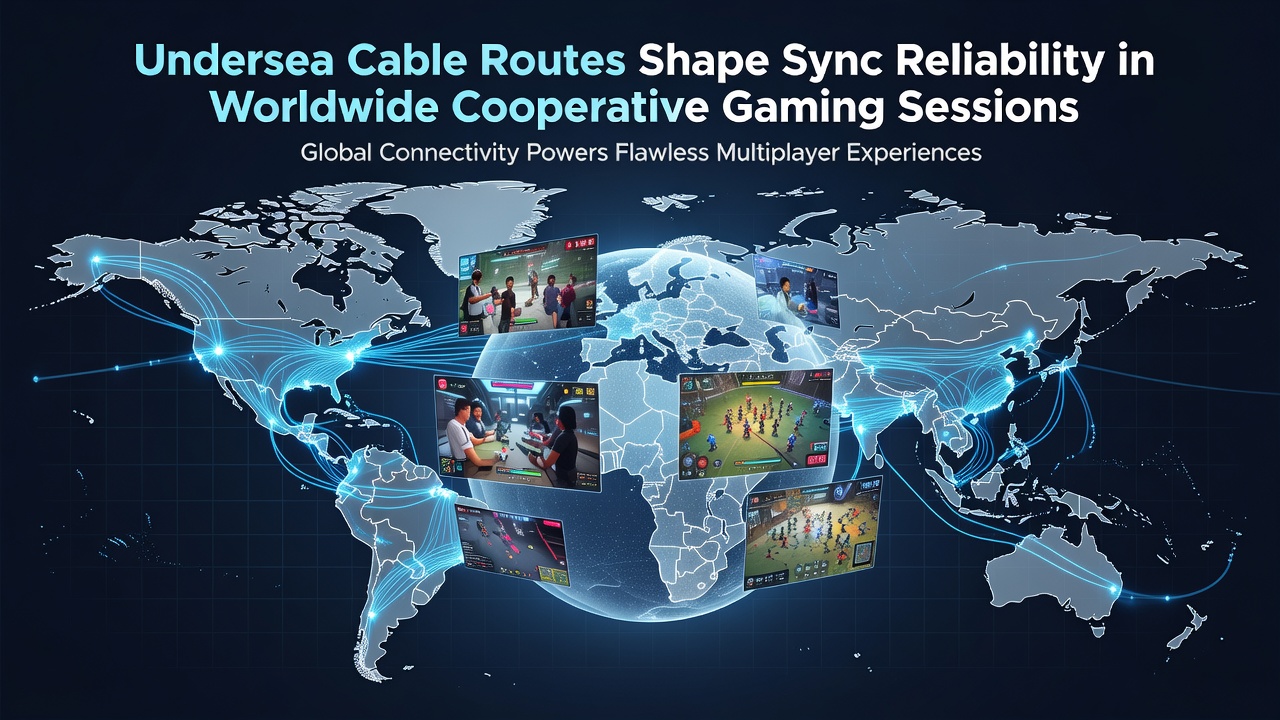
Meanwhile, routes serving Southeast Asia continued to rely on a smaller number of high-capacity systems, creating bottlenecks when regional traffic volumes peak. Figures released by the Asia-Pacific Network Information Centre indicate that latency between Singapore and Los Angeles servers fluctuates more widely than equivalent European transatlantic links, directly affecting synchronization windows in titles that require sub-60-millisecond update intervals.
Technical Adjustments by Developers and Providers
Game studios have responded by implementing region-aware server selection that prioritizes cable paths with documented lower variance rather than simple geographic distance. Some titles now incorporate dynamic path probing that detects when traffic has shifted to a longer route and adjusts prediction buffers accordingly to maintain client coherence.
Internet service providers peering at major exchange points have also begun publishing route telemetry that developers can query in real time, allowing matchmaking systems to avoid pairings that would traverse recently degraded cable segments. These measures build on earlier work documented in reports from the U.S. National Telecommunications and Information Administration, which tracked how infrastructure changes propagate into application-layer performance.
Conclusion
Undersea cable geography continues to set hard limits on synchronization quality for cooperative gaming across long distances, and ongoing additions to the global network alter those limits in measurable ways. Continued monitoring of route utilization and latency statistics provides the data needed to refine both infrastructure planning and game-engine compensation techniques.