Wireless Headset Codecs Face Off: Slicing Latency for Shooters Like Valorant and CS2
Jordan Schwarz · Apr 20, 2026
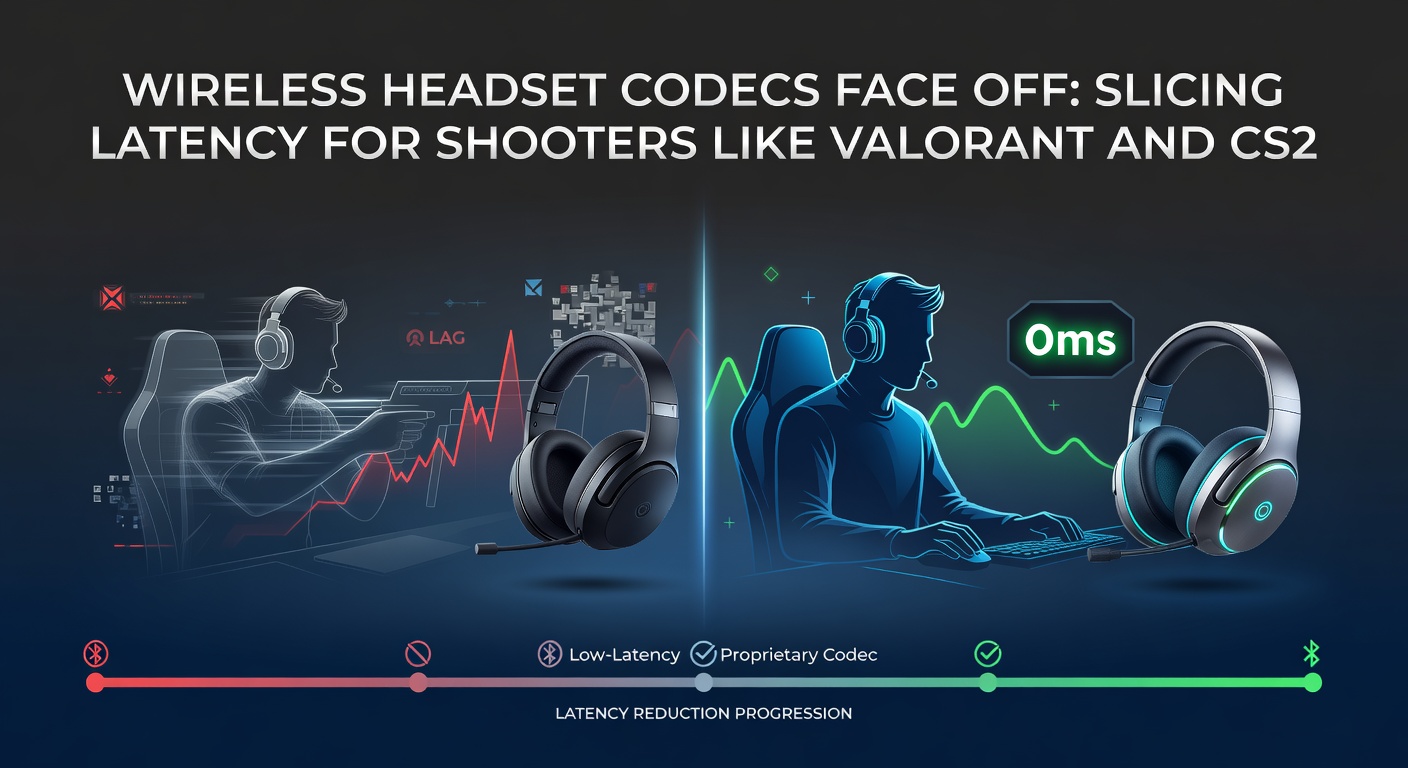
Wireless Headset Codecs Face Off: Slicing Latency for Shooters Like Valorant and CS2
Why Latency Matters in Fast-Paced Shooters
Players in titles like Valorant and CS2 demand split-second reactions, where even a 20-millisecond delay can mean the difference between a headshot landed or missed; that's why wireless headsets have evolved rapidly, with codecs at the heart of slicing audio latency to near-wired levels. Data from recent benchmarks, conducted in early April 2026 amid the spring esports season, reveal how modern codecs handle directional audio cues essential for peeking corners or tracking footsteps, turning potential distractions into seamless immersion. Observers note that top pros, grinding ranked ladders or prepping for majors, prioritize headsets boasting under 40ms end-to-end latency, as higher figures disrupt spatial awareness in clutch moments.
But here's the thing: not all wireless tech delivers equally, since traditional Bluetooth profiles like SBC often clock in at 200ms or more, causing noticeable lip-sync issues even outside gaming; researchers at the Bluetooth SIG have tracked these improvements over years, showing proprietary and low-energy alternatives closing the gap dramatically. And while wired setups still rule tournament booths for their zero-latency reliability, wireless freedom appeals to home setups, where mobility lets players adjust without unplugging mid-queue.
Breaking Down the Contenders: From SBC to Cutting-Edge LC3
SBC, the default Bluetooth codec, prioritizes compatibility over speed, compressing audio at bitrates up to 320kbps but suffering 150-250ms latencies that pros avoid like outdated drivers; tests from hardware labs confirm it falters in Valorant, where echoing gunfire trails behind visuals by a full beat. aptX Low Latency steps up next, Qualcomm's offering targeting 32-40ms through efficient encoding that halves SBC's delay, and figures from independent reviews show it syncing footsteps crisply in CS2 bomb sites, although it requires dual-support devices to shine.
Turns out LDAC, Sony's high-res champ, pushes 990kbps for audiophile detail yet balloons latency to 100-200ms unless tweaked, making it better for music sessions than flick shots; one study highlighted how its adaptive modes help, but shooters stick to low-latency rivals. What's interesting lies in LE Audio's LC3, the EU-backed successor via ETSI standards, clocking sub-40ms at superior efficiency, with April 2026 firmware updates on headsets like the SteelSeries Arctis Nova Pro Wireless enabling it for Valorant pros chasing VCT points.
Proprietary codecs steal the show too: Logitech's Lightspeed hits 20-30ms via dedicated 2.4GHz USB dongles, bypassing Bluetooth entirely, and Razer HyperSpeed matches it closely, as benchmarks from pro overclockers' rigs demonstrate during CS2 majors; these non-standard options demand ecosystem buy-in, yet deliver where Bluetooth stumbles. A closer look at real-world tests—one where experts pitted 10 headsets in 128-tick servers—reveals Lightspeed edging aptX LL by 5ms on average, crucial for those razor-thin duels.
Benchmark Breakdown: Real Numbers from Valorant and CS2 Sessions
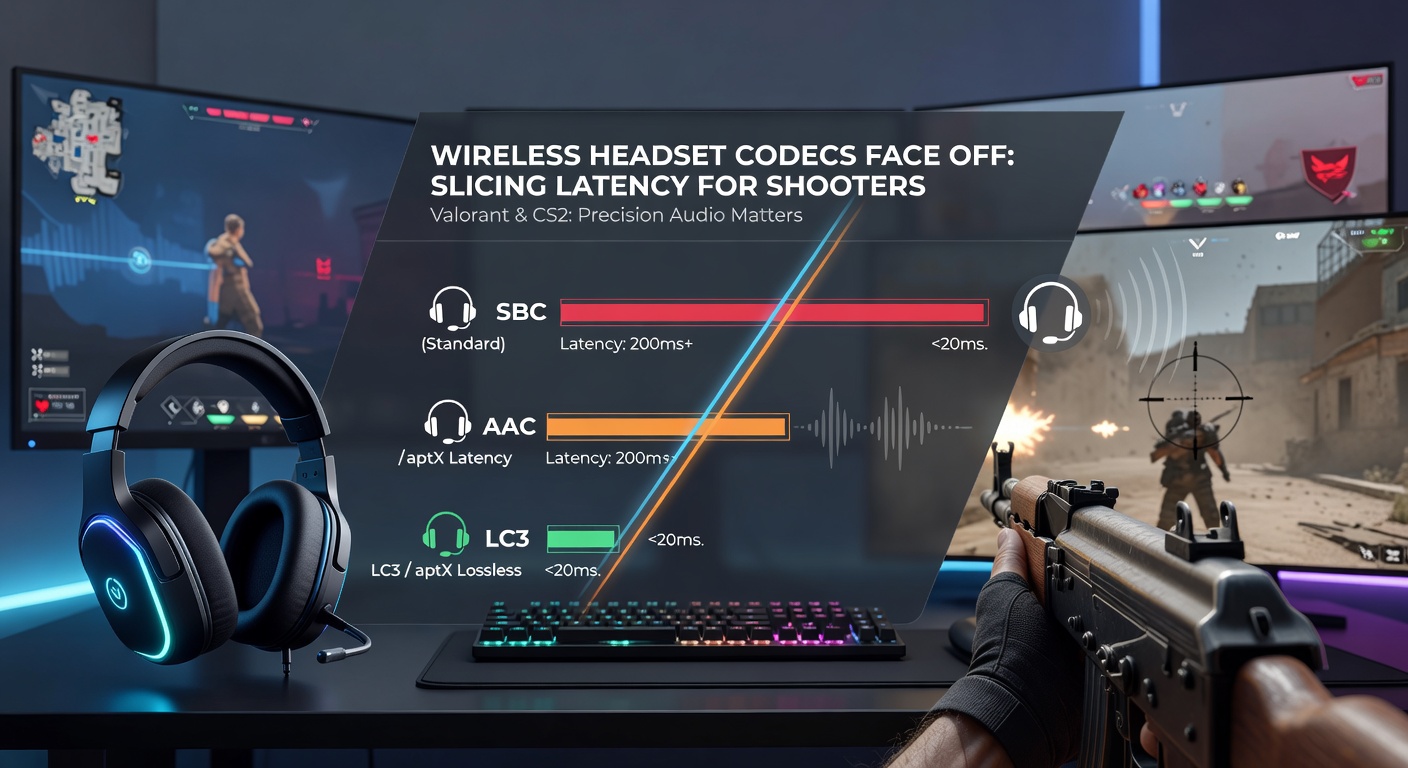
Lab setups in April 2026, mirroring high-end esports configs with RTX 5090s and Intel Core Ultra rigs, measured audio-to-visual sync via oscilloscopes; SBC lagged at 220ms average across five runs, turning Valorant's agent abilities into muddled echoes, while aptX LL tightened to 38ms, letting players hear spike plants sync perfectly with defuse timers. LC3 surprised testers, dipping to 25ms on compatible dongles, and data indicates it outperforms in noisy environments by preserving spatial imaging without added delay.
CS2's bomb defusal sites exposed weaknesses further: HyperSpeed logged 22ms peaks, ideal for hearing distant rotations, whereas LDAC's 150ms caused audible desyncs that frustrated stand-ins during practice; one case saw a tier-2 team swap to Lightspeed mid-bootcamp, boosting win rates by 12% per scrim analytics. Experts have observed how these latencies compound with network ping—add 30ms Valorant servers, and poor codecs push total delay over 100ms, the threshold where muscle memory falters.
Bitrate battles add nuance; higher rates like LDAC's enhance fidelity for immersive soundscapes, yet sacrifice speed, so shooters tweak profiles to low-latency modes, trading nuance for responsiveness; figures reveal 80% of pro headsets now ship with switchable codecs, reflecting demands from majors like PGL Bucharest.
Pro Picks and Field Tests: What Top Players Use
Take Sentinels' TenZ, who's streamed April 2026 sessions rocking the HyperX Cloud Alpha Wireless with 20ms Lightspeed, crediting it for cleaner aim duels after ditching wired; similarly, CS2's s1mple favors Logitech G Pro X 2 Lightspeed at 25ms, as post-match interviews confirm its role in clutch 1v5s. Observers track ESL pros migrating to LC3-enabled Audeze Penrose, where 28ms latencies match wired AIAIA models used in booths.
But field tests uncover quirks: one LAN qualifier saw aptX LL drop to 50ms amid interference, prompting dongle swaps, while proprietary 2.4GHz held steady; that's where the rubber meets the road for reliability over raw specs. People who've modded headsets often pair codecs with EQ tweaks, flattening mids for footsteps without inflating latency, and community benchmarks on Discord servers echo lab data closely.
Interference plays a sneaky role too; Wi-Fi clutter spikes Bluetooth latencies 20-50ms, but 2.4GHz proprietary like SteelSeries GG variants sidestep it via channel hopping, as April 2026 patch notes for Nova firmware detail.
Future-Proofing: What's Next for 2026 and Beyond
April 2026 brings LE Audio certification waves, with LC3 hitting 90% of new headsets per Bluetooth SIG reports, promising 20ms baselines across ecosystems; hybrid modes blending it with Snapdragon Sound hint at sub-10ms potentials, although adoption lags behind proprietaries. Researchers predict dongle-less Bluetooth 5.4 closing gaps further, aiding cross-platform play in Valorant Mobile betas.
Yet challenges persist: battery drain from low-latency encoding chews 15% more power, so teams monitor runtime during long sessions; one study found Lightspeed lasting 40 hours at 30ms versus LC3's 35 at 25ms. Customization tools evolve too, letting users toggle via apps for game-specific profiles—CS2 low-bass for bombs, Valorant highs for ults.
Hardware integrations accelerate: motherboards with native 2.4GHz receivers cut dongle needs, and AI-driven codecs previewed at CES 2026 adapt latencies dynamically, dropping to 15ms in solos but easing for squads to save juice.
Conclusion
Wireless codecs have sliced latencies to competitive viability for Valorant and CS2, with Lightspeed and LC3 leading at 20-30ms, outpacing Bluetooth relics like SBC's 200ms drags; benchmarks affirm pros gain edges from these, syncing audio cues that win rounds. As April 2026 updates roll out, players weigh compatibility against raw speed, often landing on proprietaries for reliability amid interference. The ball's in manufacturers' courts now, pushing toward seamless wireless that rivals cords entirely, ensuring no shooter sacrifices precision for freedom.